




EXCLUSIVE INTERVIEW:
‘Major Failure of Buhari’s Govt is Unaddressed General Buratai Corrupt Affair’-Prof. Okey Ndibe
…Says: ‘President BUHARI Arrived Power Shockingly Unprepared’
*Impact of Policies on Nigerians to Determine his Re-election in 2019
* Targets Political Opposition on Investigation and Prosecution for Corruption
*Nigerian Media Failed, Unimpressive in Investigative Reportage
*Advise: Avoid Temptation of being Cocooned in Aso Rock and Reading Prepared Speeches
*Be a Listening, Broad-minded president who looks at entire Map of Nigeria, not only a section of the collectivity
*Echoes: ‘Let’s Round Up, Prosecute, Convict all perpetrators of Corrupt Acts against Nigerians’
*Reflection: A memoir coming out in October titled Never Look an American in the Eye: Flying Turtles, Colonial Ghosts, and the Making of a Nigerian American
*PLUS His Views on ThisDAY Dome Closure in Abuja
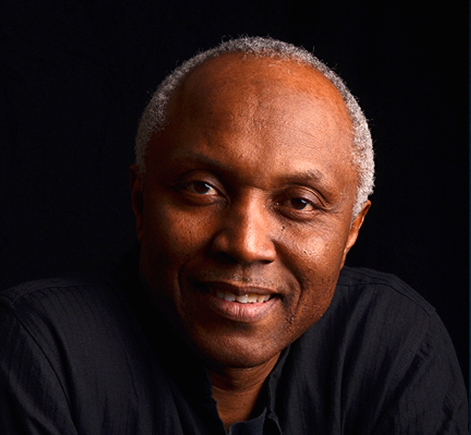
He’s fearless, seeing as Government critic for saying what he feels after careful analysis built on empirical findings. A very bold varsity don who teaches Africana Literature in Brown University at West Hartford, Connecticut with specialty in Writing and Editing. Welcome to the world of Okey Ndibe: a novelist, political columnist, and essayist. He is of Igbo ethnicity born in Yola, Nigeria. This highly celebrated Nigerian is the author of Arrows of Rain and Foreign Gods, Inc., two critically acclaimed novels published in 2000 and 2014 respectively. Okey is an author who was Allan K. Smith Visiting Professor of Creative Writing at Trinity College. He is particularly interested in public speaking as well as literary festivals, with focus on contemporary African and African American literature being a successful analyst of Nigerian politics and culture. In this Exclusive Interview with GEORGE ELIJAH OTUMU, CNNiReport Journalist North America, this very busy cerebral genius spared some thoughts on ‘State of the Nation in Nigeria, Appraisal on President Muhammadu Buhari’s War on Corruption, Rating of Nigerian Media in Investigative Journalism, A Memoir coming out in October and other issues.
 Q: How would you appraise Democracy in Nigeria presently?
Response: It would be overgenerous to describe Nigeria’s democracy as vibrant. I think it was a remarkable turning point when the Peoples Democratic Party lost the Presidency, the National Assembly, and control of a majority of the states. However, I think what we call democracy in Nigeria is too expensive and brings few benefits to Nigerians. We ought to rethink the structure of Nigeria and the nature of the structures and processes of our democracy. Our current system is still too weighted in favor of the center, and there are too many political parasites—they’re called governors, lawmakers, commissioners etc, etc—who get paid gargantuan salaries and benefits, but produce little for Nigerians.
Q: Do you think going by the present activities of President Muhammadu Buhari in power, Nigerians would vote him in for the Second Term by 2019?
Response: I suspect President Buhari arrived in government shockingly unprepared. I was appalled that it took him four months after his inauguration—and six after his election—to put together his cabinet. That kind of slowness was inexcusable. I have also written about gaps between his promises—that he belongs to no one and to everyone and that he would fight a holistic war against corruption—and his policies. He has not proposed any far reaching measures to address the crises in Nigerian education, the absence of a healthcare system, a judicial system that’s broken (with routine cases sometimes languishing for a decade or more in courts), a law enforcement system that is inept—or worse. He’s a minimalist as a president—in the same manner that his predecessors were minimalists in their conception of governance. But you have to give Buhari this: He has not shown any inclination to join in the depraved looting of public funds. In the end, whether he’s going to get reelected will depend on who the other candidates are, the internal dynamics in the APC itself, and what Nigerians think of his policies and their impact.
Q: There are allegations that this All Progressives Congress (APC) party is only chasing opposition party (Peoples Democratic Party) on war against corruption. What is your take on that?
Response: It seems to me self-evident that most of the current targets of investigation and prosecution for corruption are from the political opposition. That’s historically the practice in Nigeria—using the war against corruption as a selective tool to deal with the opposition. Many Nigerians had hoped that Buhari’s anti-corruption policy would be broader, but alas! I somehow suspected that Buhari would be in this bind. That’s why I suggested a novel approach: that he should set up a restitution commission that would oversee the return of looted funds in exchange for immunity from prosecution. Had he done that, he would have been able to tell his own friends to go before the commission, disclose the extent of their illegally acquired funds and assets, refund most of it, and be spared prosecution.
Q: As a fearless literary giant, columnist and media icon, how will you describe the closure of ThisDay Dome owned by Nduka Obaigbena whom Buhari’s administration claimed owes the Federal Government?
Response: Let’s be clear. I’m neither a literary giant nor an icon of anything. I am a writer, doing my best to be heard, seeking to use the idioms of fiction and political commentary to touch the world. There are few icons and giants in the world, and I am far from belonging in their league. My take on the closure of ThisDay Dome is a purely legal one, since I have no information that the action is tied to political repression. If ThisDay failed to live to its contractual obligations, then the company deserves to face legal repercussions. However, if there’s evidence that the closure was an attempt to muzzle a media organization, then I absolutely condemn it.
Q: Would you say Nigeria’s anti-graft agency, Economic and Financial Crimes Commission (EFCC), is following due process in its war against Governor Ayodele Fayose of Ekiti State and Femi Fani Kayode, former Director Media & Publicity for PDP?
Response: These are legal matters that are best debated by lawyers in courtrooms. I don’t have the wherewithal of legal knowledge to make an informed pronouncement. But I can make a statement of principle: I detest and reject corruption as stoutly as I condemn abuses by public institutions, including the EFCC. By all means, let’s round up, prosecute and convict all perpetrators of corrupt acts against the Nigerian people. But the government and its agencies must play by the rules even when it comes to indicting alleged plunderers, money launderers and the like.
Q: There are rumors in some quarters that the ruling style of Buhari is autocratic, only reminiscent of military mentality…
Response: I was deeply troubled by President Buhari’s administration decided to hold on to suspects who’d been granted bail by the courts. We should have the rule of law, not the rule of Buhari or the rule of the EFCC! So, that was an autocratic impulse on display there. Still, I President Buhari strikes me as far less obsessed than some of his predecessors to meddle in the affairs of the legislative or judicial branches of government. So there are negatives and positives there.
Q: Recently, we had news that General Yusuf Buratai, Nigeria’s Chief of Army Staff, spent a fortune to buy properties in Dubai, yet the EFCC, Nigerian Army and Code of Conduct Tribunal have not queried him. What’s your position on this emerging trend?
Response: I’m thoroughly dismayed that the institutions you named did not demand that General Buratai explain the source of the funds that enabled him to invest in real estate in Dubai. The Army even came out with what struck me as unimpressive defense of the General, asserting that he purchased the real estate with his savings. How much do Nigerian Generals get paid, exactly? Has the military officer been doing other forms of business that made him wealthy? At any rate, is it permissible for such a high-ranking officer in active service to engage in business transactions in a foreign country? Even if General Buratai’s investment is above board, the government ought to convince Nigerians of that fact. And the way to do so is to carry out an open, transparent inquiry. For me, the unaddressed Buratai Affair is a major failure of the Buhari administration.
Q: Would you say the Nigerian media are truly living up to standards of investigative reportage?
Response: I’m afraid not. There are occasional flashes of investigative work by the Nigerian media, but—considering the scale of graft and betrayal of the public trust—the media’s work is far from impressive or adequate.
Q: You have written several books, which of them attracts your fancy the most?
Response: I have two novels,Arrows of Rain and Foreign Gods, Inc., and a memoir coming out in October titled Never Look an American in the Eye: Flying Turtles, Colonial Ghosts, and the Making of a Nigerian American. I also co-edited a book (with the late Zimbabwean writer, Chenjerai Hove) titled Writers Writing on Conflicts and Wars in Africa. I like each book for a different reason, but always in a heartfelt way. I don’t have a favorite.
Q: What projects are you presently working on?
Response: I’m writing another novel titled Native Tongues. And I’m always doing my most important work—being a husband to a wonderful wife and a father to our three children.
Q: What advice will you give President Buhari now so as to steadily navigate the ship of Nigeria aright and ensure the masses are not continually suffering?
He should be a listening president, a broad-minded president, a president who looks at the entire map of Nigeria, not only at a section of the collectivity. He should avoid the temptation of being cocooned in Aso Rock and reading prepared speeches. Above all, he should make a point of listening to “ordinary” Nigerians, those who are hardly ever called stakeholders, but who are both the most vital stakeholders in Nigeria and the perennial victims of their country’s often pathological history.
