




OPINION EDITORIAL:
Poor Public Relations, Uncoordinated Itinerary, Parochial Culture Ruined Alaafin of Oyo’s Brazil Visit-Latin American journalists
*BY JANET LIS DA ROCHA, PAOLA FERREIRA & BAMIDELE ASAJU/GUEST WRITERS/BRAZIL, Naija Standard Newspaper Inc USA
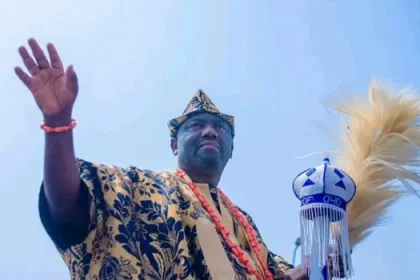
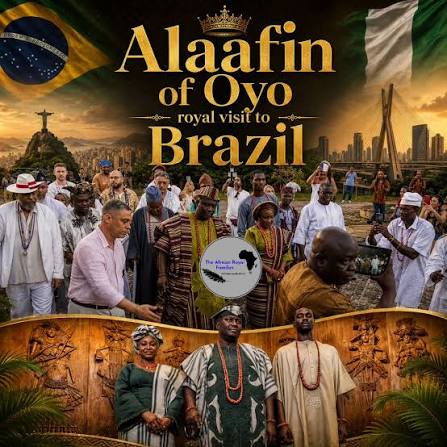
The dust is yet to settle on the official visit of His Imperial Majesty, the Aláàfin of Oyo, Oba Akeem Abimbola Owoade I, to Bahia in July 2026 which was hailed as a watershed moment in Nigerian, Yoruba, and Brazilian relations. The Yorubas represent Nigeria’s most important cultural link to Brazil. The agenda comprised diplomatic, academic, and cultural activities, as well as participation in events related to the effort to internationalise Oyo’s historical heritage and the launch of the book ÒYÓ. The City of Yoruba Cultural Heritage-a masterpiece created via collaboration between Brazilian and Nigerian colleges and the Royal Palace of Oyo.
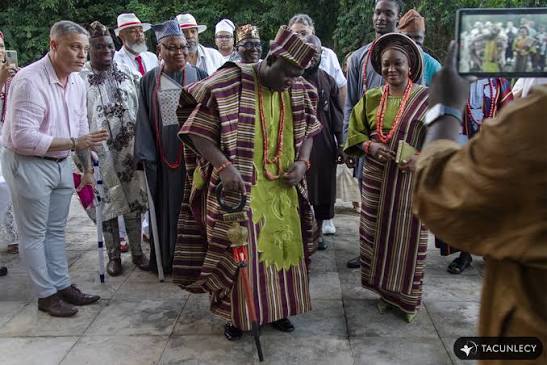
The visit was very meaningful for Afro-Brazilian religious leaders who practice Sàngó (also known as Candomblé).
Many Afro-Brazilian religious leaders and temples who worship Sàngó (also known as Candomblé) saw the visit as more than just an institutional objective. There was talk of a spiritual reunion between the diaspora and one of the most prominent historical organisations in the Yoruba world. The Aláàfin is revered as an ancestral figure in Candomblé, associated with the memory of Sàngó, the deified king of Oyo. His presence is still felt not only in Brazil, but in all Afro-Atlantic religious traditions, where the temples led resistance and survival efforts for enslaved Africans in colonial Brazil.
It was not a small event. It was never a trivial thing. For many, it symbolised the realisation of an ancestral reunion on Bahian soil, the most Yoruba region of Brazil.
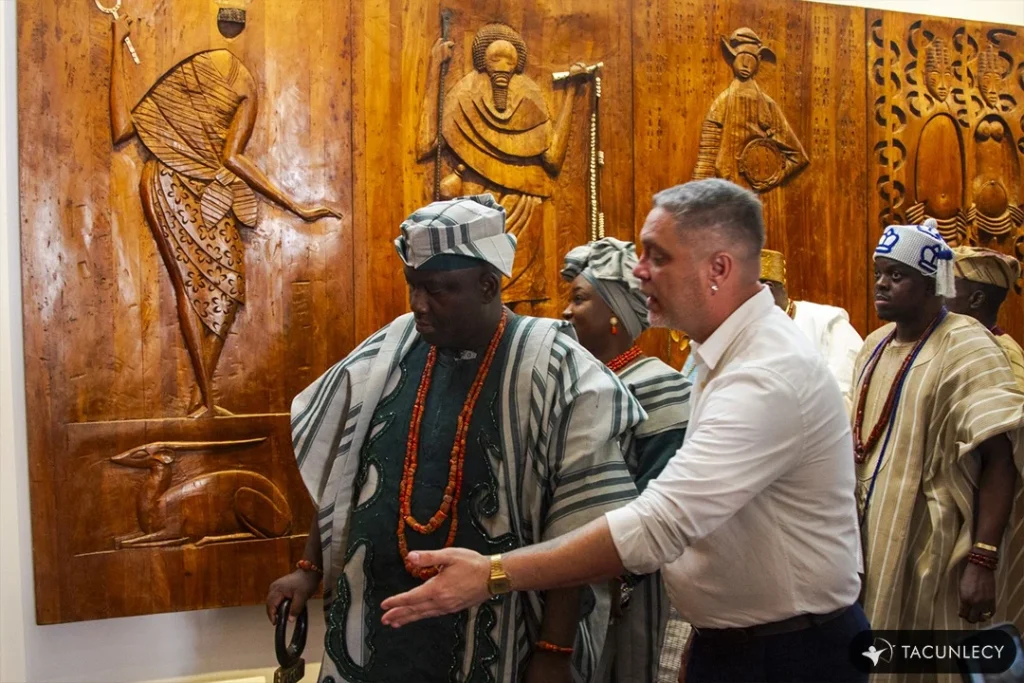
For this reason, what was supposed to be a celebration of shared memory became, for many attendees, a cause of dissatisfaction, anxiety, and introspection.
From the beginning of the tour, there were complaints about the lack of a transparent public itinerary. Religious leaders, researchers, and representatives from traditional communities and cultural organisations had trouble acquiring information about timetables, travel arrangements, and participation requirements. Schedule changes occurred without prior notice; visitors were caught aback by last-minute alterations, and diverse representatives of the Candomblé community felt excluded from an event that, at its core, was intended to generate narratives, acknowledgement, and bonding.
Much of the criticism was directed at an organisation founded by a white Portuguese woman in charge of arranging the visit, including translations. However, rather than focusing on specific individuals, this piece encourages thought on the representation models being developed between Oyo and the Brazilian diaspora. All cultural mediation creates power. Those who plan agendas, choose interlocutors, establish priorities, and manage access channel influence, boosting some narratives while obscuring others. When a protocol professional takes on a key position in the story they are supposed to support, they are no longer just a bridge between cultures.

In this scenario, a concern arose that went beyond the protocol concerns themselves. What concerns us is the perception of a drive to centralise and control the narrative of Yoruba history in Bahia via the viewpoint of someone who is not even part of the Yoruba tradition. This is not to reject the relevance of international cooperation or to call into doubt Nigeria’s relationship with the Brazilian diaspora. The danger lies when a communal heritage may be presented, organised, and legitimised through an overly centralised mode of mediation. It’s dangerous when the entire event becomes a personal endeavour.
Oyo has an outstanding place in Yoruba political and cultural history. However, Yoruba civilisation was never established by a single kingdom, city, or government. Ifè, Kétu, Ègbá, Ìjèbú, Ekiti, Ondo, Ìjèsà, and other centres contributed to its historical creation. Similarly, the Brazilian diaspora has kept its history through hundreds of communities, traditional residences, and religious lineages that have never been tied to a single narrative.
This perspective poses questions that go beyond religion. When a narrative strives to establish itself through access control, strategic alliance creation, and legitimisation granted by specific organisations, it raises a red flag in the fields of cultural heritage, historiography, ethics, and cultural rights.
Who gets institutional, intellectual, religious, or political credibility when Yoruba history is presented through a single point of mediation? From one translation? From a European who fills the space meant for the voices of Brazilian and African ancestors?
Who determines which communities will be welcomed?
Who decides which voices will be heard?
Who is still on the fringes of this process?
Perhaps the most alarming issue is not the existence of mediators-those well-known translators of “authentic” voices-but the risk that mediation may cease to serve the communal heritage and instead compete for the limelight in the very past it was designed to bring closer.
This uneasiness became even more apparent at one of the visit’s most talked-about moments. The program included a gathering at the traditional Tuntun on Itaparica Island, also in Bahia, which is regarded as one of Brazil’s most prestigious Candomblé households.
The town had organised rituals, tributes, and all of the required infrastructure to welcome the Aláàfin´s delegation. Priests, initiates, and visitors waited hours for the delegation to arrive. The Alaafin had never appeared. Worse, the community’s own accounts indicate that there was no proper notification regarding the cancellation, nor was there any formal reason.
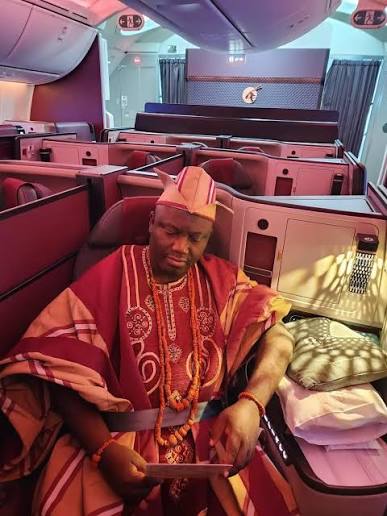
In a diplomatic situation, this would already be embarrassing. In the context of Yoruba traditions, where hospitality, respect, and reciprocity are core principles, the story became even more significant.
Perhaps the most important legacy of the 2026 visit will be the issues it raised, rather than the rituals conducted or the book launched. The Aláàfin’s visit demonstrated how centralising models of representation can harm the mediation of Yoruba culture between Oyo and the Diaspora; by concentrating the authority to narrate, select, and legitimise memories, these models end up reproducing colonial practices that are incompatible with Yoruba civilisation’s historical plurality.
We cannot ignore Oyo’s greatness or the Aláàfin’s historical significance in the diaspora. The key idea is to acknowledge that the power of Yoruba civilisation has always been found in the cohabitation of several political, spiritual, intellectual, and community centres. Its richness lay not in uniformity, but in plurality.
The organisational Lusitan fiasco that accompanied the Aláàfin’s journey to Brazil should serve as a caution to future international endeavours involving Candomblé groups and the Yoruba diaspora to include Brazilians in the protocol, in the translations, and in the event organisation. If the goal is to strengthen ties between Oyo and Brazil, more open protocols, better-prepared cultural mediation professionals, and a really respectful attitude toward the range of traditions that preserve the Yoruba legacy outside of Africa are required.
Brazil is also Africa. It ought to be respected.
Yoruba memory in Brazil is not the property of a single individual, city, institution, narrative, or set of mediators. It is one of the many voices that have preserved it over centuries and continues to do so daily in shrines, traditional communities, families, and ancestral areas.
And perhaps this is the most important takeaway from the 2026 visit: Yoruba legacy will only remain faithful to its own past if it continues to be developed by the multiplicity of its peoples, traditions, and memories-not by the concentration of authority over something that has always been community.
Let us continue forward with religious and cultural exchanges with other traditional monarchs who will visit Brazil in the coming years.
*PICTURES: COURTESY: TACUNLECY
* Rocha is a master’s student in Museology at the Federal University of Bahia; Ferreira is a humanitarian diplomat, journalist, and researcher of Yoruba religious traditions and practices; and Prince Asaju is the Global Coordinator of Egbe Omo Yoruba Ni Agbaye/World Yoruba Museum Brazil
DONATE TO HELP BUILD A SPECIAL APPS FOR JOURNALISTS AGAINST LIVER ELEVATION & KIDNEY FAILURE:
CERTAINLY, Good journalism costs a lot of money. Without doubt, only good journalism can ensure the possibility of a good society, an accountable democracy, and a transparent government. We are ready to hold every corrupt government accountable to the citizens. To continually enjoy free access to the best investigative journalism in Nigeria, we are requesting of you to consider making a modest support to this noble endeavor.”
By contributing to NAIJA STANDARD NEWSPAPER, you are helping to sustain a journalism of relevance and ensuring it remains free and available to all without fear or favor.
Your donation is voluntary- please decide how much and how often you want to give.
FOR OFFLINE OR ANONYMOUS DONATION ON THIS PROJECT OR HELP COVER COST FOR SERIES OF UNDERCOVER REPORTING IN INVESTIGATIVE JOURNALISM, DO PAY DIRECTLY FROM ANYWHERE IN THE WORLD TO: UNITED STATES LEAD BANK, CHECKING ACCOUNT NUMBER: 213799651654 OR NIGERIA BANK NAME-MONIEPOINT *BANK ACCOUNT NUMBER: 7076577445
Feel free to send us an email: letters@nigeriastandardnewspaper.com or call us directly at +2347076577445 (Nigeria) or WhatsApp American Roaming Mobile Number: +16825834890 (Chat messages only available)
donation
