




EX-CHAIRMAN, EDITORIAL BOARD VANGUARD NEWSPAPER BREAKS SILENCE:
‘Professionalism discarded in Nigerian Guild of Editors”-Ikeddy ISIGUZO, famous journalist, Editor-in-Chief/MD, The Oracle Today newspaper
…Says: ‘Beyond soliciting for money to organise conventions, money that is never accounted for, the Guild leadership would visit politicians who patronise the peculiar skills’
*’Nigerian Media Performance is Pathetic, Peripatetic and Opaque’
* ‘Democracy without a free press is what the civilian administrations want’
* ‘Nigerian Union of Journalists, Nigerian Guild of Editors have fallen into too much familiarity with politicians’
*Lament: ‘I had watched years of the Guild declining to unacceptable standards of leadership for its members’
 *PLUS How Credibility can be brought to Online Journalism in Nigeria
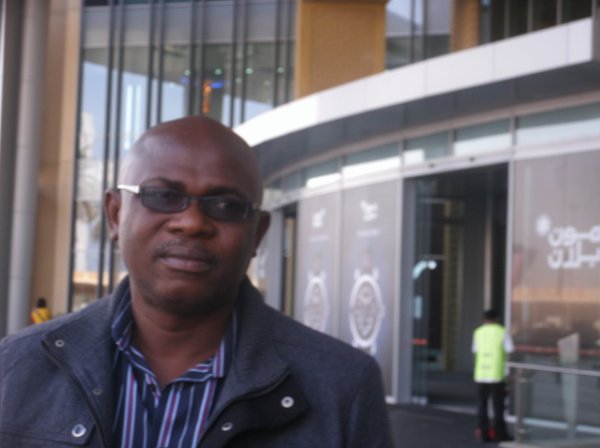
IKEDDY ISiGUZO is a thorough-bred Nigerian journalist with decades of experience in core investigative journalism. He is not a kind that plays to the gallery, but a media personality who will always stand truth on its head, very daring, honest and well respected senior member of the Fourth Estate of the Realm. In this Exclusive Interview with our United States Foreign Bureau Chief, GEORGE ELIJAH OTUMU, this intelligent Editor-in-Chief and Managing Director of The Oracle Today, a Nigerian weekly newspaper based in Onitsha, also having an online version on oraclenews.ng bares his mind on sundry issues relating to his appraisal of Nigerian Journalists in the present democracy, position on the reaction surrounding his exit at Nigerian Guild of Editors (NGE); How Free Press works in Democracy and his adventure into journalism which led him into then becoming Chairman, Editorial Board, Vanguard newspaper
Q: How will you describe the performance of the Nigerian media in our democracy?
Pathetic. Peripatetic. Opaque. Many would add their own impressions. The media spent a lot of time fighting for the return to civil rule, thinking that the military was their biggest enemy. They have long found out that the civilians did not want the media to be more than watchdogs that did not bark.
Democracy without a free press is what the civilian administrations want. It took 11 years of the Freedom of Information bill walking through the conspiracies of the National Assembly for it became law. When it did, it emasculated the provisions of Section 22 of the 1999 Constitution, which state that the media should hold governments accountable to the people, by listing various aspects of government practices, especially finances, and matters relating to petroleum exploration, as not applicable to the Freedom of Information Act of 2011.
On the part of he media, there have been few acts of bravery, and they have been far between. The issues are over-whelming in most cases. They range from poor journalism skills, absence of training programmes and facilities, poor funding of media organisations and institutions, and policies changes that strangulate the media.
The performance of the media has been as much a function of the challenges before the media as much as the type of media that the society wants, some would say deserves.
Q: Will you say the Nigerian media have failed Nigerians or performed creditably well?
Nigerians have learnt to abridge their expectations of the media, just as they learnt to do with other spheres of life. The media have not performed creditably well. Nigerians would not count that as failure in the sense you would mean it. They see it as one of the learning curves in the nation’s life. While we are at it, they are getting much titillation from online publications that they do not seem to know the difference between what the media should do and what the should never do.
Q: What role do you think Nigerian Union of Journalist, NUJ and Nigerian Guild of Editors, NGE have played in Nigeria’s democracy?
Both bodies joined with civil society organisations – labour, NGOs – in protesting the inadequacies of our democratic practices. It did not last for too long. The organisations have fallen into too much familiarity with politicians and this has become the bases for assessing our democracy. Neither body has done much lately for our democracy. It is really a shame because the organisation held a lot of promise in the earlier days of the return to civil rule; they have easily fallen in line.
Q: Do you have any regret ever being a journalist?
I have never for a moment seen journalism through the lenses of regret. The feeling is more of sadness at societies’ opportunities that are wasted because the weaknesses in media practice have left journalists with few chances of exploring situations in our societies.
Q: Can you kindly take us through the rots in NGE as it affect Nigerian journalists?
The NGE is supposed to be the apex leadership for journalism practice in Nigeria. Initially, the criteria for membership were so stringent that they ensured that those who made it to the Guild would have passed through years of training and tutelage in the profession. Suddenly the standards were lowered and the Guild was flooded with many who could never have been editors, no matter how low the standards were. The Guild’s standards for membership are abysmally low.
These have resulted in many, whose interests are more materialistic than in journalism, gaining ascendancy in politics than practice of journalism. Over the years, the Guild fell into the hands of those who saw in it opportunities for self interests, political appointments, and exploitation of their assumed leadership of the nation’s editors for gains that damaged the interests of journalists and journalism.
Q: We heard that leadership of NGE is politicised going cap-in to meet politicians….yes or no and why that?
I do not think “yes” or “no” would answer this adequately. There is politics in almost everything in life. What we have in the Guild is politics that align like minds in the prosecution of the agenda of appropriating the Guild for a selfish few, who thrive on excluding those who question the secrecy in the activities of the Guild. Professionalism was discarded to the extent that at Guild’s annual conventions, contrary to the Guild’s constitutional provision that the state of the profession should be discussed, journalism, its practice and the challenges they face are never discussed.
Beyond soliciting for money to organise conventions, money that is never accounted for, the Guild leadership would visit politicians who patronise the peculiar skills Guild leadership confers on those who are so-minded.
Q: You stood out, fighting ineptitude, corruption, ethnic colouration in NGE, was there any time your life was threatened or in danger?
If there was I never noticed. Moreover, I didn’t see this as a fight. I had watched years of the Guild declining to unacceptable standards of leadership for its members, and extending those standards to its appreciation of issues that affect the society. I thought it was more important that I told my colleagues that we were misleading society than the consequences for me as an individual, though I could consider the threat that the Guild has become to journalism a danger to my life as a journalist.
Q: Do you plan to float another body for Editors in Nigeria?
After the initial articles I wrote about the decay in the Guild, most people thought I was doing so to prepare grounds for setting up another body. It is not my intention to do the same thing the Guild is doing in another way.
My interests lie in core journalism training and practice so that we can redeem some of the damage that the Guild has done. Many wayfarers who promote profit over professionalism have invaded our profession. I am searching for like-minded people who would work with me in promoting professional journalism above lucre.
Q: How can credibility be brought to Online Journalism in Nigeria?
Regulation of online journalism has proved futile elsewhere. It may not be different in Nigeria. However, our challenges are entirely different. More people are depending on online platforms for news, information, and literature for other purposes. As telephones and other hand-held devices become media convergence platforms the role of online journalism will continue to surge. The reasons include the freedoms to access news at anytime, from a multiplicity of sources, in your privacy, and most importantly, the opportunity to participate in making news, contributing ideas, or even being the one reporting as blogger, citizen reporter, eye witness or any of the several other things online journalists call themselves.
There was a time you could go online and be a news consumer, now you can go online and be a newsmaker, a news platform owner, and the deliverer of news from remote parts with reports, that only you had the skills to connect them to the global village.
I think that more credible journalists, with the skills, dedication, knowledge, and education on the trends in online journalism should populate the space and set examples of credibility that should apply in all spheres of journalism, even the online genre.
What has happened is that many “serious” journalists have conceded online journalism to charlatans. They have worsened the situation by playing to the rules of the charlatan instead of elevating discussions and supervening on issues, especially as they affect the ethics of the profession.
Q: Tell us about the highpoint of your sterling media career?
I started off at 18 as a Sports Reporter at The Punch, before I studied Mass Communication at the Institute of Management and Technology, IMT, Enugu. Since then I have worked as a Sports Reporter at The Guardian, then Deputy Sports Editor, Sports Editor, Deputy Editor, Member, Editorial Board, and Chairman, Editorial Board, all at Vanguard where I spent 27 years of my career. In-between, I have taught part-time journalism courses (mostly editing and news writing) at the Pan-Atlantic University, Lagos, where I took a Master’s in Media Enterprise, 28 years after I left IMT. I have written for magazines, and appeared on radio and television programmes and other platforms to discuss women, sports, politics, journalism, or society. It is difficult for me to pinpoint a highpoint of my career. Each stop for me was important for the contributions it made to what I am.
Q: What is your take on the ongoing royal battle between Ooni of Ife and Oba of Lagos?
There is a lot of idleness around. I do not know whether we should also hold recession responsible for this. In an era where many people have “become” journalists, for that is the only thing to “become”, issues are escalated more for their entertainment than their news value. Many of those leading us through the news circus do not even understanding the traditional under pinning of how traditional rulers relate to each other in public. If the Oba of Lagos had not “snubbed” the Ooni of Ife, some would have queried the propriety of the Ooni of Ife being the one to greet the Oba of Lagos? I think it is an incident that was blown out of useful analysis. Once it became a matter for online journalism, a reasonable position on it became impossible. Even those who have not seen the video are commenting on it; at the end of their treatise, they are ethical enough to add, “though I have not seen the video”.
Q: We heard President Muhammadu Buhari is sick, recuperating at home. What is your position?
I am not a medical doctor. My position therefore is of an ordinary Nigerian, who is affected by the President’s illness since his absence from the public generates its own theories on how well he is. I also think that too much is being made about the fact that he works from home. Most presidential complexes, and ours is not an exception, comprise a home and an office. Most times we are not certain from which one the President works. If the country were running well without the President’s health being seen as an impediment, most Nigerians would not be bothered about which room in the complex is the President’s work place.
Q: Finally, tell us about the success of your media publication
I started work with a new organisation four months ago. It is called The Oracle Today, a weekly that is based in Onitsha, one of the foremost commercial cities in Nigeria, famous for the “Onitsha market Literature”, decades ago. I would not consider it a success yet, but we are making great efforts to make it a success.
Ikeddy ISIGUZO is Editor-in-Chief and Managing Director of The Oracle Today, a Nigerian weekly newspaper based in Onitsha. It is also available online on oraclenews.ng
