




*‘Shutting down schools cannot be the solution to banditry, terrorism, and gang violence. There must be a better way. You cannot keep children at home simply to keep them safe’
*‘Due to insecurity, there is food insecurity, because of food insecurity, there is hyperinflation and there is no stable power supply’
*‘International Community should withhold funding, except Nigeria can demonstrate that the INEC Chairman is neutral in electoral process. Greater number of our Nigerian judges are corrupt, only a handful in the minority are incorruptible’
*‘The FCT Minister, Nyesom Wike is imperial and hardly democratic, I have been senator for three years and we have never had a one-on-one conversation’
*“I do have hope in Nigeria. We are a blessed country, and our diversity, which many see as a burden, is a strength and an advantage we have not yet fully harnessed. My message to the diaspora is: do not give up on Nigeria”–KINGIBE
*PLUS, how General Ibrahim Babangida spoke with her and the family to confirm the assassination of then Head of State, General MURTALA MUHAMMED and how Ajoke, her eldest sister, former First Lady survived the trauma
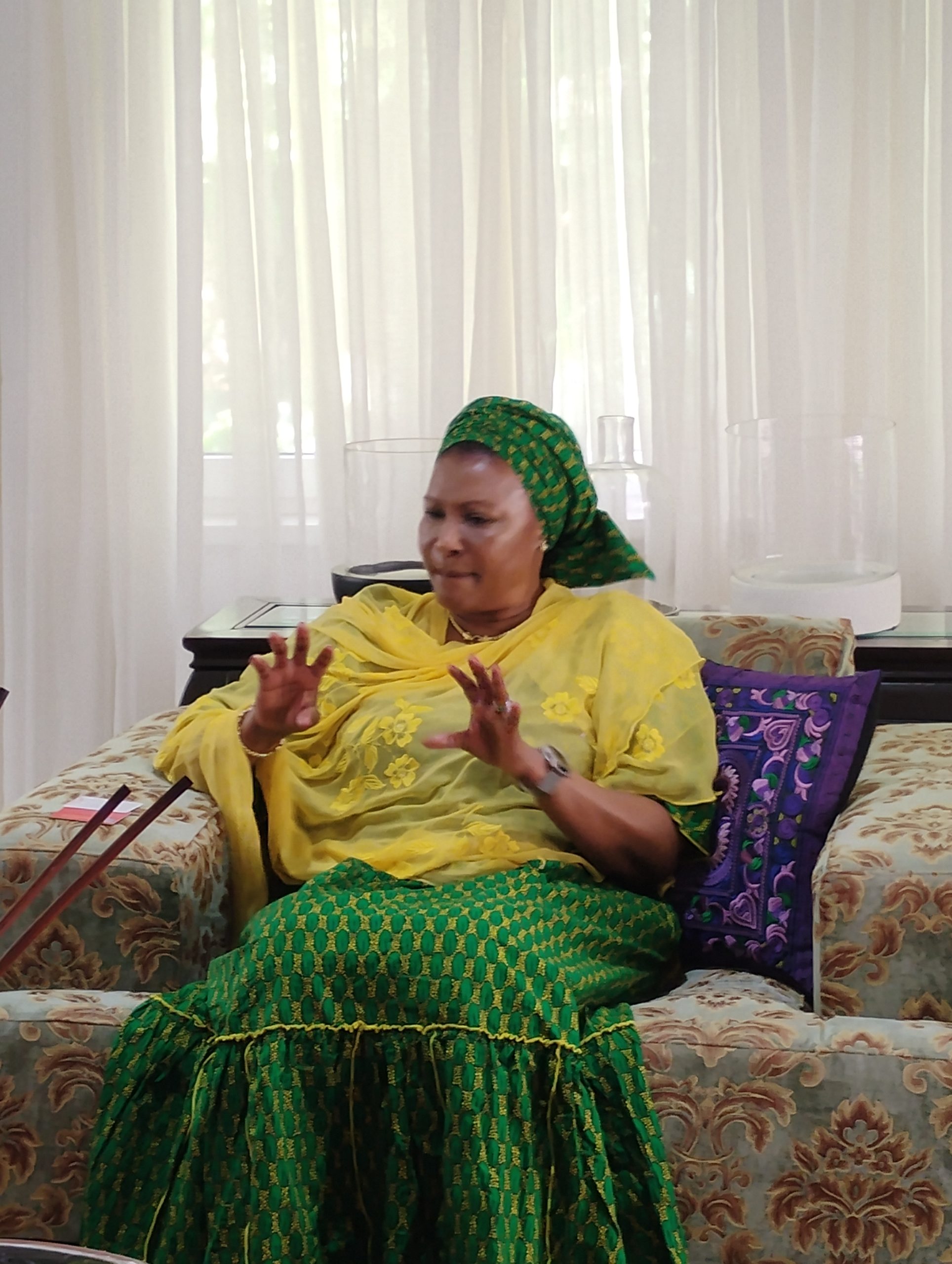
SHE IS 72 years old, utterly unafraid, and constitutionally incapable of silence on behalf of the powerless. Senator Ireti Heebah Kingibe, the sole senator of the Federal Capital Territory (FCT), Chairman of the Senate Committee on Women Affairs, and Vice-Chairman of the Committee on Social Development and Poverty Alleviation, carries the rare distinction of a woman who has spent a lifetime breaking into rooms not designed for her alone, and then, once inside, refusing to sit quietly, but remarkably outspoken.
Born on June 2, 1954, into a home as richly layered as Nigeria itself, with a Yoruba-Fulani Muslim father and a Delta Igbo-Bonny Christian mother. Kingibe grew up speaking Hausa, Yoruba, and Igbo with equal fluency, a linguistic and cultural inheritance that made her, in her own words, the quintessential Nigerian. Her early education began at Emotan Preparatory School before she proceeded to Queen’s College in Lagos and then Washington Irving High School in New York City for her secondary education. From there, she crossed into the American Midwest and enrolled at the University of Minnesota, where she earned a degree in Civil Engineering, at a time when engineering remained one of the most stubbornly male-dominated professions on earth.
Her career launched in 1978 as a Quality Control Engineer with Bradley Precast Concrete Inc., before she moved to the Minnesota Department of Transportation Design unit, where she worked as an engineer from 1979. In 1981, she returned to Nigeria to complete her mandatory National Youth Service Corp (NYSC) year, serving as a Project Supervisor with the Nigerian Air Force base in Ikeja, Lagos. What followed was a distinguished career in construction and project management: a planning engineer with New Nigeria Construction Company in Kaduna, a consultant with Belsam Limited, and subsequently Regional Engineer with Lodigiani Nigeria Limited in Lagos between 1990 and 1994, before transitioning into private consultancy as a senior partner with Kelnic Associates, Abuja.
Her political instincts, however, were already in full formation long before Nigeria knew her name. At the University of Minnesota, she had contested and won the presidency of the Nigerian Students’ Union, a foreshadowing of a woman who believed, as a matter of moral conviction, that if something is not right, you do not wait for someone else to fix it. She entered partisan politics in 1990 with the defunct Social Democratic Party (SDP), was appointed as adviser to the party’s national chairman, and then navigated a political journey that took her through the Peoples Democratic Party (PDP ) in 2006, the APC in 2014, the Labour Party in 2022, and ultimately, in December 2024, the African Democratic Congress (ADC), where she now stands as the party’s sole serving senator in the National Assembly.
Her 2023 electoral victory was seismic. Running on the Labour Party platform, riding the extraordinary energy of the Peter Obi Obedient movement, she defeated three-term incumbent Senator Philip Aduda, who had held the Federal Capital Territory (FCT) Senate seat since 2011, by a margin that left no room for ambiguity: 202,175 votes to Aduda’s 100,544. INEC Returning Officer Professor Sanni Saka declared her winner on February 28, 2023.
On June 13, 2023, she was sworn into the 10th National Assembly as only the second woman in Nigeria’s entire democratic history ever elected to represent the Federal Capital Territory, the highest elective office in the FCT.
She is the second female FCT senator in history. She is one of only four women in a chamber of 109 senators. She is, in the most unadorned terms, a woman doing the work of an era in a system not yet built for her.
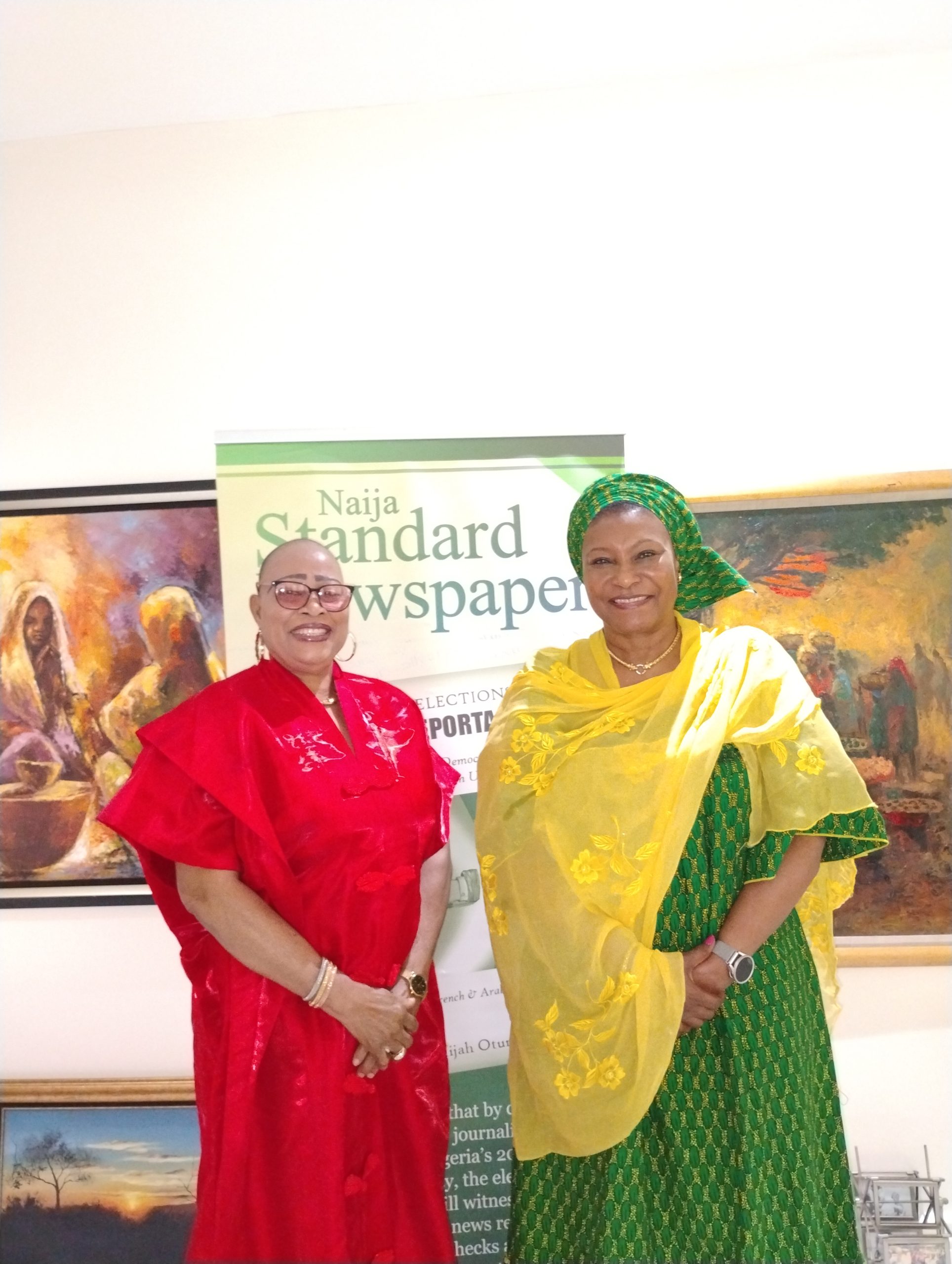
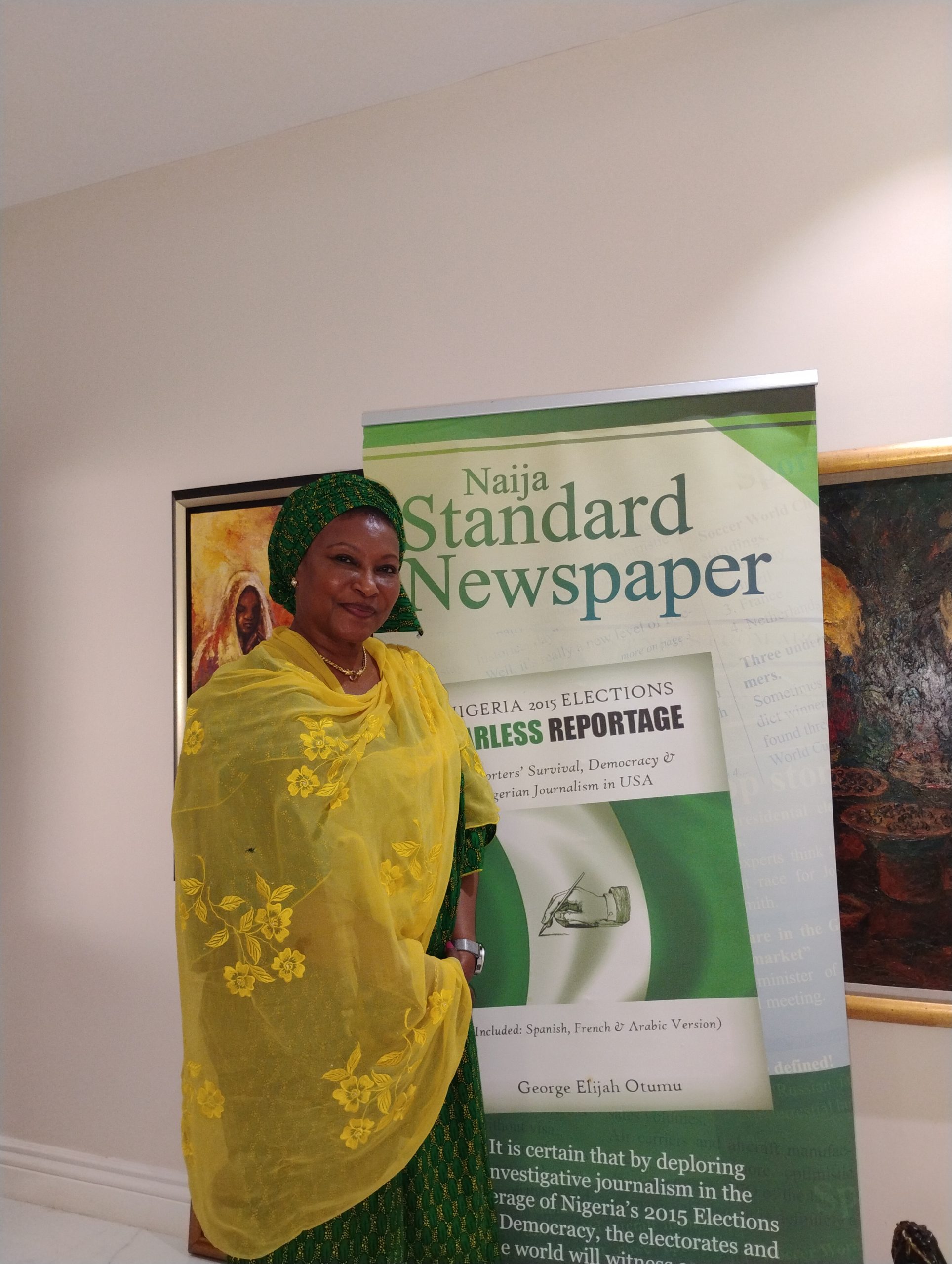
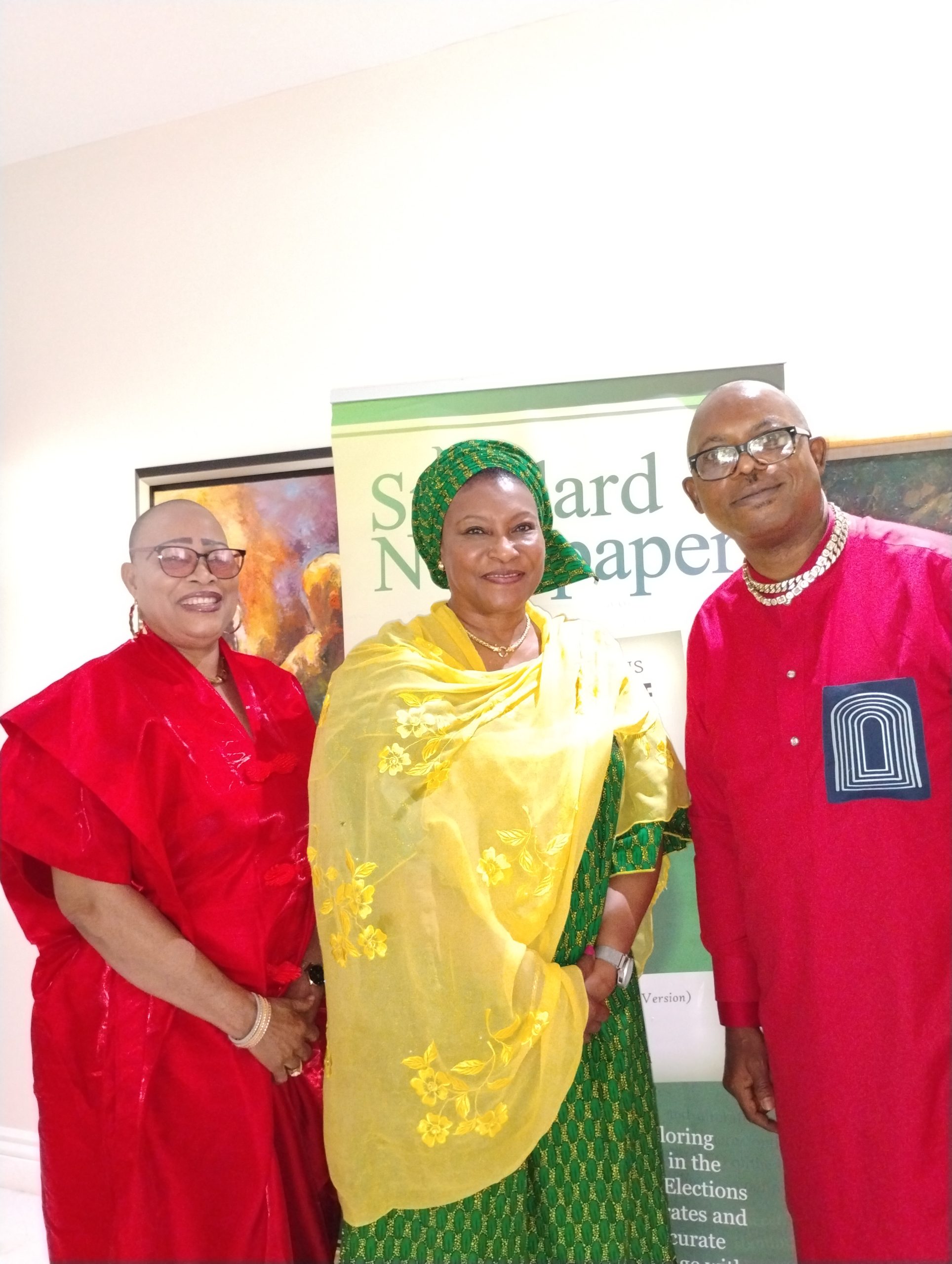
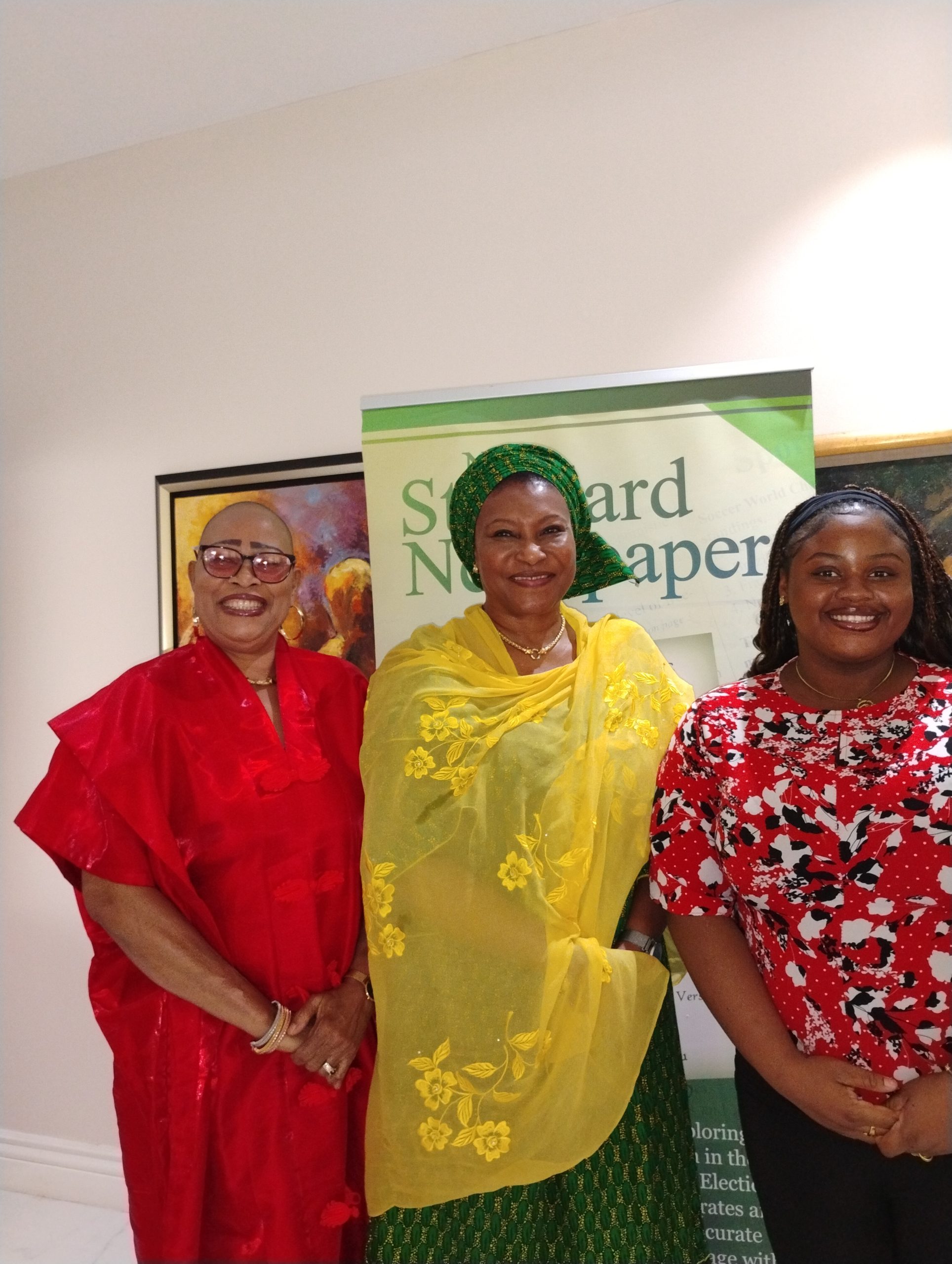
In this World Exclusive Interview with the Editorial Board of Naija Standard Newspaper Inc USA, who visited her at her Abuja residence, Senator Ireti Kingibe speaks with the candor of a woman who has nothing to lose and everything to fight for, on women’s representation, the brutality of Nigerian politics, her fears for 2027, the corruption of the judiciary, and why she believes the greatest untapped political force in Nigeria is the Nigerian woman as reported BY FAVOUR BOLUWATIFE PHILIP/SOUTH WEST Correspondent, NIGERIA/Naija Standard Newspaper Inc USA
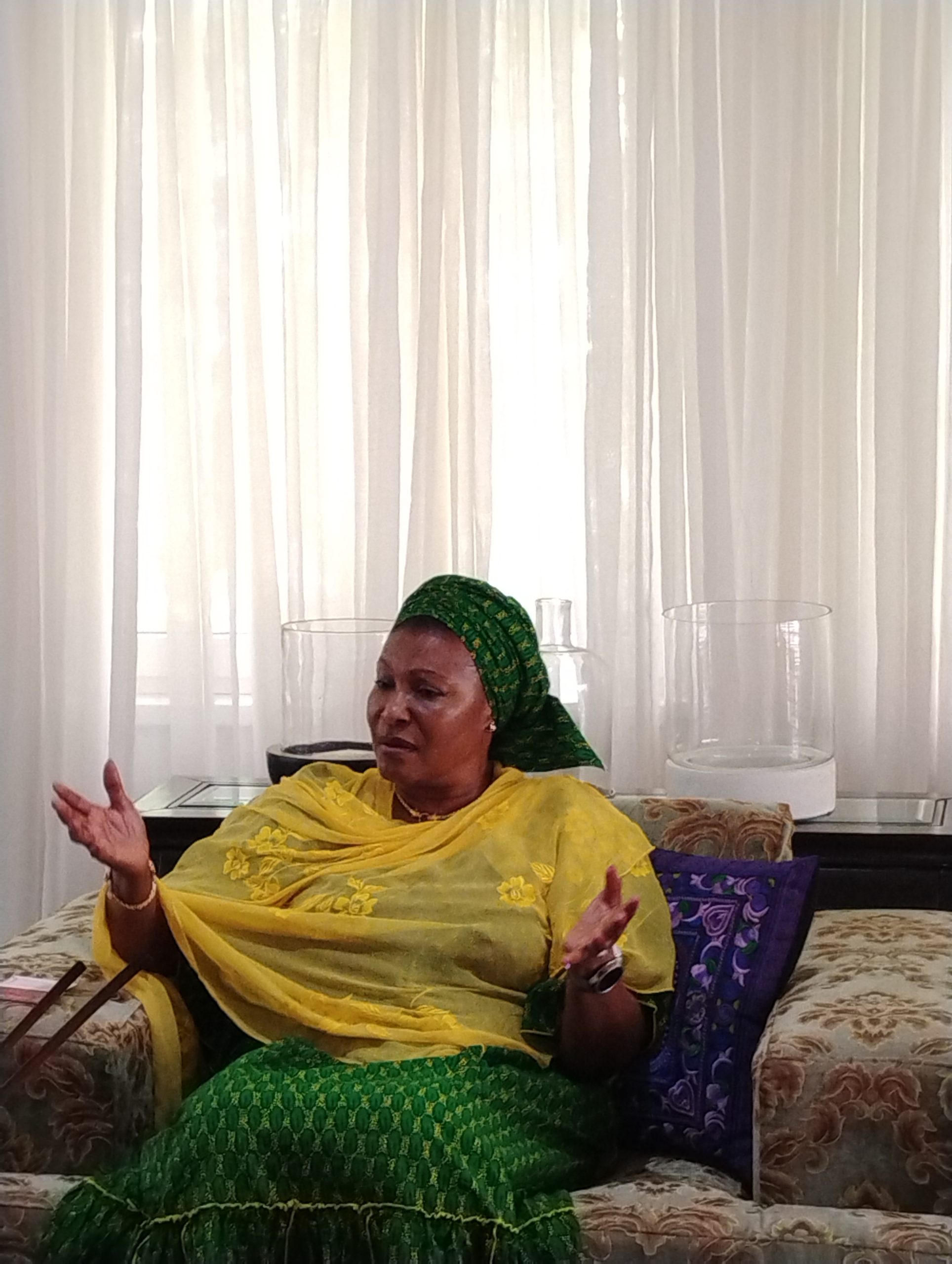
*NAIJA STANDARD: As Chairman and Vice-Chairman of so many committees here in Nigeria’s Senate in the National Assembly you have made significant waves, particularly on issues concerning women. Could you recall some of the high moments, those evergreen moments, as Chairman of the Committee on Women Affairs and Vice-Chairman of Social Development and Poverty Alleviation? What were some of the impacts you made on those committees?
*SENATOR KINGIBE: In terms of ecology and climate change, I must say we lagged a little, because we feel we have not done enough to deplete our environment the way the developed countries have. But obviously, it is never too early to start protecting our environment.
Now, when it comes to the subject of women, I must say I am a little disheartened. As Chairperson of the Committee on Women Affairs, we were championing something called the ‘Special Seats for Women’. All it means is just additional seats, I believe 12 additional seats in the Senate and 37 in the House of Representatives, into which only women can be elected. It is not as though those seats are automatically given; they have to be won. The people have to vote. But it is simply a mechanism, and it is supposed to have four cycles. It has a sunset clause. It is supposed to be a mechanism for the inclusion of women in policymaking.
Right now, in a Senate of 109 senators, there are only four women senators. And I fear that in the next assembly, the 11th assembly, there may even be fewer than four. In the House of Representatives, I know the exact numbers for the 10th assembly: there are 14 women. But going forward, more than likely there will be even less. I feel that no country can properly develop if it leaves 50% of its population behind. There are certain discussions, certain policies, certain laws; certain bills, that women have to be at the table for. You need the right perspective.
Let me give you an example. Maternal healthcare is something women feel passionately about. I can understand if a man does not feel as passionately about it. He has never given birth; he has never gone into labour. He does not fully understand what we are discussing. Only another woman understands the problems of another woman. In political parlance, they say: when women speak, women understand, because in many things, a woman does not have to explain in detail to another woman what a man could not possibly understand.
In terms of bills, I had what is called the 35% gender inclusion bill, formally the Gender Equal Opportunity Bill. It means at least 35% across the board, for women or even men, for that matter. It has gone to first reading. I am still working on getting it to second reading. But I fear I may not have a National Assembly that is receptive enough to actually pass it. The previous assembly brought it forward, but it was bunched together with a lot of other things, and they threw them all out.
I feel that a lot of what women are asking for is not unreasonable. One example: if a man marries a non-Nigerian woman, she automatically receives citizenship. The reverse does not work. That is unfair, because that Nigerian woman is a full citizen of this country with all of the same rights as a man.
Let me tell you another thing that bothers me. It was recently brought to my attention that in a number of hospitals here in Abuja: one doctor attends to 100 women for antenatal care. Many women must get up at 5:00 a.m. simply to receive antenatal care, because there are so many women and so few doctors. There are places I visit where a woman may need to walk or ride a motorbike for almost three hours to reach even a modest primary healthcare facility.
These are some of the challenges we face. Yes, we have made progress in many things. We have some of the brightest people in the world. But we have a great deal of work to do at home.
Also, on the 9th of July, I am receiving an award from an organisation called HelloMaze. HelloMaze conducts public opinion sampling using the MTN platform. They sample opinions, and they gave certain legislators legislative and democratic excellence awards. I am pleased to say that I will be among those honoured. Mostly, I believe, because in a country where many people are cowed into silence, I speak up for the people. I am 72 years old, and at that age, I suppose you are not afraid to tell anybody the truth as you see it.
In terms of my greatest achievements, I think those are still yet to come.
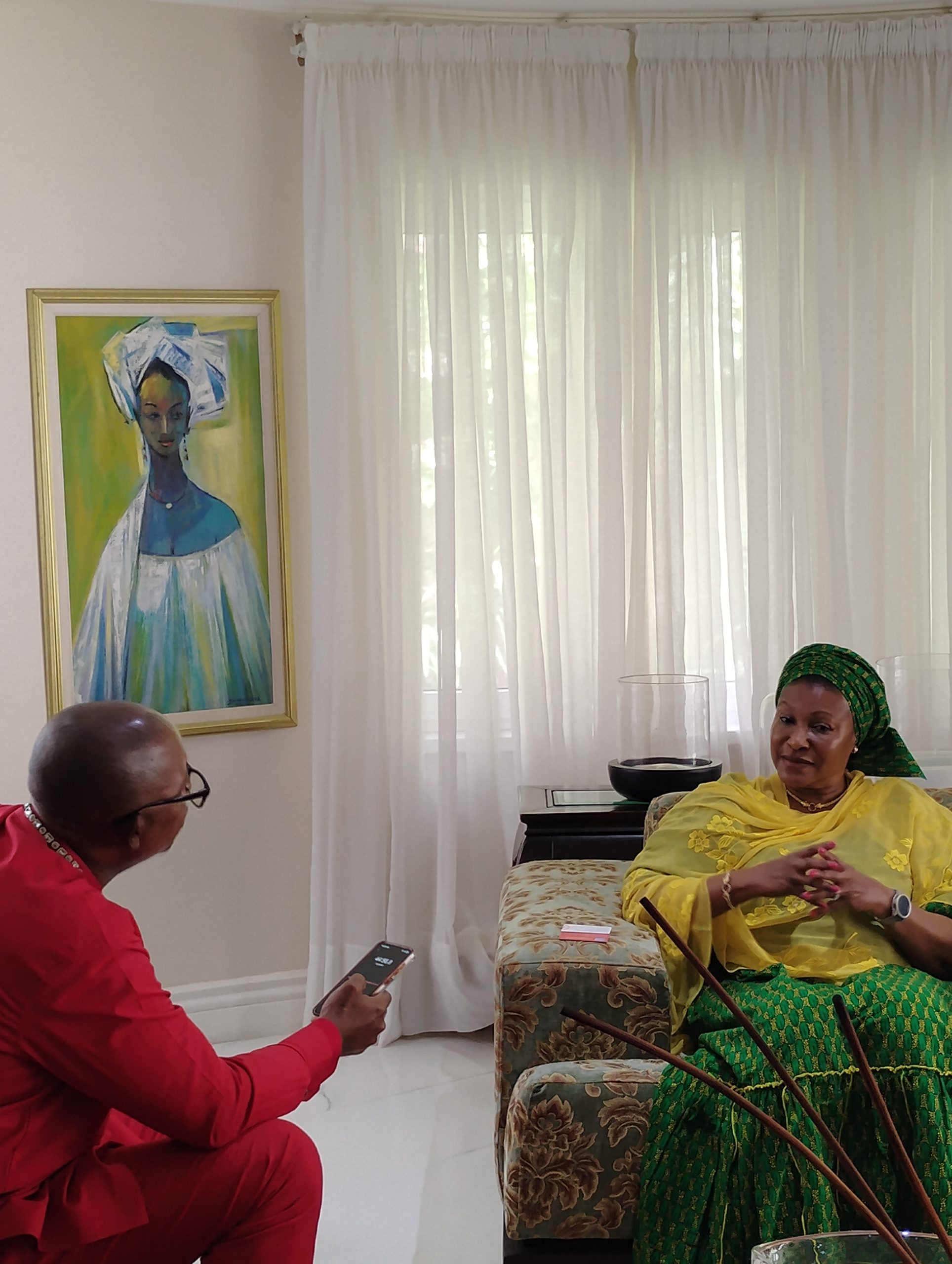
*NAIJA STANDARD: It is very clear that you have been persistently pushing for greater women’s representation in the Senate. Is there a specific mechanism that would allow women to have more say and more representation in the Senate and the House of Representatives?
*SENATOR KINGIBE: The mechanism was going to be the Special Seats Bill. That is how other countries with more women in office have achieved it, by having certain seats into which only a woman can be elected. When you do that over four election cycles, you find that enough women have come through that you no longer need to continue. It is a form of affirmative action. Just as affirmative action for women in the United States was designed to get more women into medical schools, universities, and every sphere of public life. At the time of affirmative action in America, if two equally qualified candidates were competing for something, it would be given to the woman, just to redress the imbalance. But right now, I do not think America needs affirmative action for women. Many young people there probably wonder what it even was, because they do not know the era when women like Gloria Steinem and Betty Friedan fought for the freedom of women. We are still at that point here in Nigeria.
*NAIJA STANDARD: That brings us back to the United States. You studied Civil Engineering at the University of Minnesota, and after graduating, you also worked at the Minnesota Department of Transportation. Could you speak briefly about your experience over there?
*SENATOR KINGIBE: I found America to be a place of opportunity. I went to high school at Washington Irving High School in New York City before proceeding to the University. But I always had a yearning to come home and put whatever I had gained to use. I had a number of opportunities to work in the United States after graduation, but I chose to come back and do my National Youth Service Corp (NYSC), which I completed with the Air Force. After that, I worked for a company called New Nigeria Construction Company in Kaduna, and subsequently for Lodigiani Construction. Over time, I decided I no longer wished to remain in the construction industry and I opted out.
I also did a great deal of project management, supervising estates. Sometimes the government would have a job involving as many as 42 contractors doing different things on a single estate, and you obviously need a project manager to coordinate and bring it all together. However, I found these projects less straightforward than working in the United States, because we do not have the same processes, systems, and institutions in place. That makes things considerably harder to execute.
I have always been interested in politics. When I was at the University of Minnesota, I ran for and became president of the Nigerian Students’ Union in Minnesota. I have always been the kind of person who believes: if something is not right, do not wait for somebody else to fix it, get up and do it yourself.
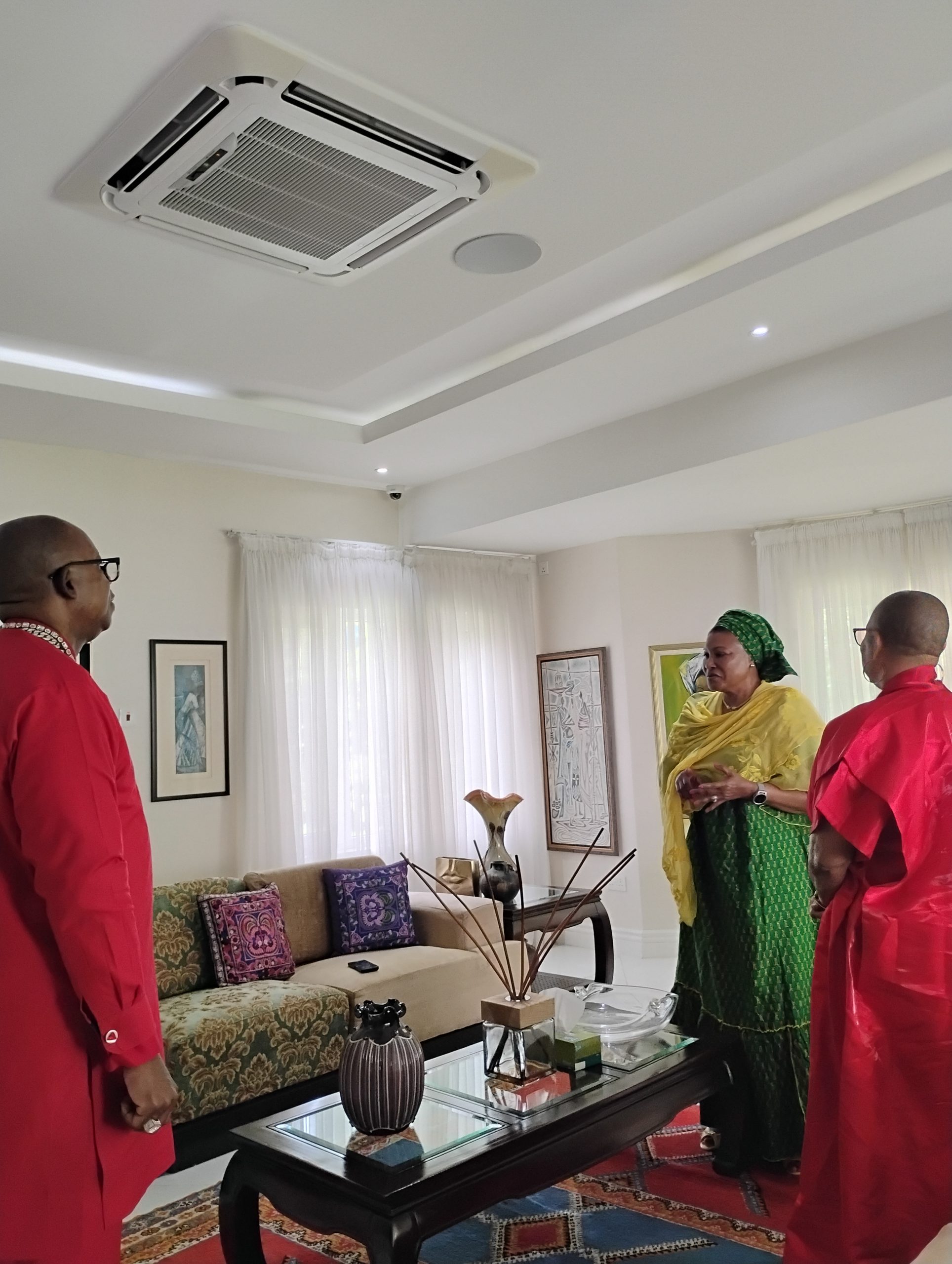
*NAIJA STANDARD: Looking ahead, what kind of lasting legacy would you like to be remembered for as an outstanding parliamentarian in Nigeria?
*SENATOR KINGIBE: There is still hope that I can pass my 35% bill, but more importantly, what the people of the Federal Capital Territory (FCT) commend me for is speaking up on their behalf. The FCT is not a state. I am the highest elected person in the FCT, the sole senator it has, and I am meant to work in tandem with the Minister of FCT, Nyesom Wike, who is an appointee and is executive, working on behalf of the President, who is supposed to be the de facto governor of the Federal Capital because that arrangement is not entirely workable, there has always been a Minister. Now the city is built. Ideally, we should have an elected mayor, but we do not yet have one.
Most ministers in the past have worked with the elected representative of the people. Except this time. This particular minister is, I would say, very imperial and hardly democratic. He appears to feel he should have the option of choosing whoever he wants as senator, rather than the people making that choice. I cannot explain his reasoning, perhaps because I am female, I do not know. I have never had a One-on-One conversation with him, and I have been senator for three years. Usually the process is: the people bring their issues to me, I take those issues to the Minister, and together we resolve them. So, when there is a situation like the hospital crisis I described, too few doctors, inadequate medicines, I should be able to sit with him and say, there is a problem, and we need to address it together.
A few weeks ago, one of my opponents hired thugs to come and attack us at our state office. This is one of the reasons women, except really stubborn ones, do not come out for politics: the violence. During the attack, I was trying to protect a young woman who was recording everything. They wanted to take away her phone. She passed the phone to someone else to hold and then ran to me, and I put her behind me. I suppose that annoyed the thug, because he flung me against the wall and I hit my head on it. Not a major incident, but my vision blurred briefly. I reported it to the police and did all the necessary things. I decided to go to a government hospital, specifically because I wanted to experience firsthand what the lapses in our healthcare system are. And I discovered a great deal.
The opposition is having a very difficult time in this country right now. There is a movement to create what amounts to a one-party state, which I believe is not democracy at all. You cannot play football by yourself; you need at least two teams. I firmly believe that a vibrant opposition is essential for democracy to thrive anywhere.
*NAIJA STANDARD: What are your fears about the 2027 general election in Nigeria?
*SENATOR KINGIBE: Honestly, I see the possibility of violence everywhere. The truth is that the last three years have been extremely difficult for Nigerians. There is a great deal of insecurity, more than one can possibly imagine. I was watching a programme recently that suggested at least 70% of Nigerians have been overwhelmed by bandits and terrorists. My first instinct was that it must be an exaggeration. But then I listened to the analysis, place by place, and it became very clear. In many areas, schools are now being shut down. Shutting down schools cannot be the solution to banditry, terrorism, and gang violence. There has to be a better way. You cannot keep children at home simply to keep them safe.
Because of the insecurity, there is food insecurity. Because of food insecurity, there is hyperinflation. There is no stable power supply. And stemming from all of this, telecommunications are also not functioning at the level we have seen previously. Everything is degenerating. So, Nigerians are desperate for change. By the same token, the incumbent government appears adamant that no matter what, win or lose, they intend to remain. In such a situation, where Nigerians are fighting for their very survival, I do not see how there will not be violence.
*NAIJA STANDARD: On that note, many of us remember the June 12, 1993, election won by Chief M.K.O. Abiola, widely regarded as the freest and fairest election in Nigerian history. Do you think Nigeria can ever have a free and fair election again?
*SENATOR KINGIBE: We can, if the process by which the Independent National Electoral Commission, (INEC) Chairman is selected is removed from the presidency. The Chairman has to be truly independent. I cannot give you a job and expect you not to do my bidding; that is the heart of the problem. We in the opposition have no confidence in the electoral umpire. To date, they have not been fair. We complained about the last chairman, but even he was considerably better than what we have now. We see the current chairman as completely partisan. How does a partisan umpire conduct free and fair elections?
*NAIJA STANDARD: How can the international community step in to ensure that Nigeria witnesses a free and fair election?
*SENATOR KINGIBE: I believe they should insist, and they do have leverage, because I know there is a great deal of international funding for our elections. That funding must not be released unless it can be demonstrated that the INEC Chairman is neutral. You would have seen the recent reports about certain political parties being deregistered by the High Court, even after the Supreme Court had already given them the go-ahead. On what basis do you deregister the ruling party’s second-largest opposition? It would be as though the Republicans in the United States decided to deregister the Democrats simply because they are not in The WHITE HOUSE, claiming they have not won enough elections. ADC alone has at least nine or ten senators, not to mention House of Representatives members. Whether the ruling party likes it or not, there must be other parties in the electoral contest.
*NAIJA STANDARD: There are allegations of widespread judicial corruption in the country. Do you share that concern?
*SENATOR KINGIBE: Yes, I do believe it exists. From what I have observed, many judges are corrupt. But I must also say there are perhaps five to ten percent who are not. When I had cause to go to Court, I must say that the judges I encountered, both at the first Electoral Tribunal and at the Appeal Tribunal, were part of that incorruptible minority. They were absolutely principled. They did not take money from me or from my opponents. In fact, they did not even give you the opportunity; they did not make themselves accessible enough for that to happen. So, there are proper, honourable judges. But there are far too many who are not. A great many judgements are, regrettably, made corruptly.
*NAIJA STANDARD: Nigeria is the largest Black nation in the world, and yet it has never had a woman, as President. We have seen women presidents in Liberia and other parts of Africa. When do you think Nigeria could witness a woman, as President? And do you intend to contest for the presidency in the future?
*SENATOR KINGIBE: No, I do not intend to contest. And first, it has to be done in baby steps. I am telling you, there are only four women senators in this chamber we are talking about. There are so few women in the House of Representatives. Women’s representation in governance is currently at four percent. We rank 185 out of 189 countries globally when it comes to women’s representation. We have never had an elected woman governor. So, when you speak of the presidency, let us start with the Vice-Presidency. We are still working to get women into policy positions at all. We need to start somewhere meaningful and build from there.
Now, I had initially planned, before my constituents en masse insisted that I had to run again, to step back after this term. It was not my intention to continue. I had planned to find a younger woman, give her my structures and my support, and get her elected. I wanted the seat to remain with a woman. I did not find such a woman, at least not one who could win, not simply because she is female, but one who would genuinely understand the problems of this country and empathize with the issues of women. I did not want to hand my seat to a man, because that would simply reduce the number of women in the chamber.
What I was planning to do, and still believe is necessary, is for women to constitute themselves into a lobby bloc. I had already secured an office for that purpose, and I was in discussions with international organisations about support, laptops and resources. One of my key plans was to build a database of every Nigerian woman voter, ward by ward, local government by local government, state by state, and to send them messages on a regular basis. Almost a reorientation, helping them understand that men are not simply going to hand power over and say, “Here, come and take it.” Women have to demand it. And the only way they can do that is with their votes.
I was also going to ensure that even at the councilor level, women would know this is your ward, these are the three men running for councillorship and here is which one is most favourable to women, a true ‘He or She’. When men see that women can deliver their votes in bulk to a particular candidate, we are no longer simply begging, it becomes incumbent on them to seek out the support of women.
On election day, most men already know that the bulk of those who vote for them are women. Women come out regardless, rain or shine, whatever the obstacles. At the last local government elections held in Abuja, the Minister instituted a 22-hour curfew on the day of the election and filled the streets with policemen. Even as a senator, I was intimidated by the number of security forces I encountered when I went out. Most people arrived at the polling units, saw the intimidation, and turned back. The ones who persevered and dared to vote were, overwhelmingly, the women. When I visited some polling units to observe what was happening, one official said to me: “Only women came out to vote.” The men were more afraid, or perhaps the women reasoned that the police would be less likely to assault them. What I am saying is this: we have not yet used our numbers. That is one of the things I am working to change.
*NAIJA STANDARD: Senator, you mentioned during this interview that you are 72 years old, yet you certainly don’t look the age. You carry yourself more like someone in their early fifties. What is your secret to looking and feeling so vibrant?
*SENATOR KINGIBE: Well, the grace of God, I suppose. Perhaps a measure of genetics as well. I honestly could not tell you with any certainty, but I do know that I need to look after myself.
I slept at 3:30 a.m. last night, and the night before that at 2:30 a.m. There is simply so much to do. I keep telling myself that going forward, I must carve out more time for myself, time to rest, time to attend to the things I should be doing. That was one of the reasons I had wanted to step back. But my constituency insisted it had to be me, and no one else.
Part of the reason they were so insistent, I believe, is that the Minister, the FCT Administrator, had publicly assured people that Senator Kingibe would not return in 2027. So, the people responded accordingly. They said, “We have not gone to the polls; you do not even vote here; and yet you have decided you can stop her from returning. We are determined that she must come back.” They put enormous pressure on me, and they made me feel that if I did not run, the Minister would have succeeded by pressuring me to determine who would represent them in the Senate. So, I had to run, to demonstrate that it is the voters, not the executive, who made that decision.
That is the fundamental principle: in politics, your decisions are never entirely your own. They belong also to your constituents. You have to include them in what matters to them and find the right balance between your own judgment and their wishes.
*NAIJA STANDARD: You are the younger sister of Alhaja Ajoke Mohammed, the former First Lady of Nigeria, who was married to the late General Murtala Muhammed, a former Head of State. Looking back at your childhood, what was it like growing up alongside your elder sister?
*SENATOR KINGIBE: ‘Sister’, as I call her, is and has always been a quiet but profoundly strong woman. And I was particularly close to her growing up. I spent a great deal of time in her home; I even lived with her before she got married. I also stayed with her at different points after her marriage, spending many of my holidays in her company.
Interestingly, I look very much like her, so much so that some people used to think I was her daughter. I would have to correct them: “No, she is not old enough to be my mother. She is my sister.” Sister is a warm, kind, and generous person. I got along wonderfully with her children. Sometimes when it was time for them to return to school, she would ask me to take them back, because being closer to their age, I could relate to them more naturally. With her older daughter especially, when she was younger, I was someone she could confide in. Her mother would say, “You take her,” and I would drop her at school and come right back.
And even my nephew, who is getting married this weekend in Accra, and we shall all be there, I used to carry him as a baby. He felt almost like my own child. He was the most peaceful baby, one of those who seemed never to cry. Even when he was hungry, he would simply look at you quietly. We are a very close family.
*NAIJA STANDARD: Can you recall the first time your sister introduced you to General Murtala Muhammed? What was your impression of him?
*SENATOR KINGIBE: He was a fascinating man, very blunt, always spoke his mind without hesitation. I remembered one occasion vividly. I must have been about fifteen years at the time. He came home visibly upset about something and he was yelling. I looked around and noticed that the entire household seemed completely unbothered. Everyone simply went about their business. I asked one of them, “Are you not worried about how angry he is?” The response was, “No, no, he just yells. Once he is done, the matter is over for him. He does not carry things.” And that was true of him. He did not brood. Whatever upset him in that moment, he would express it loudly and forcefully, and then it was done. Finished. The storm would pass as quickly as it came.
*NAIJA STANDARD: When General Murtala Muhammed was assassinated in 1976, how did you receive that news, and how did your sister cope with such a devastating loss?
*SENATOR KINGIBE: It was not easy, not for her, and not for any of us. My sister was just 32 years old when she was widowed, and she had six children. Her youngest was only seven months old at the time.
I was in the United States at school when we heard that a coup had taken place and that the Head of State may have been killed, though we were not certain. All four of my sisters who were studying at the University of Minnesota gathered, and we began calling every contact we could reach. My immediate older brother was living with my sister in Nigeria, and we kept trying to get through to him. He could not confirm anything. All he knew was that General Murtala Muhammed had left for work that morning and had not returned.
Eventually, it must have been very late at night by American time, we finally got through to General Ibrahim Babangida, who confirmed to us that General Murtala Muhammed had indeed been killed. It was a devastating moment.
My sister, however, was not in Nigeria at the time. She was in Italy, having left the country a day or two before the coup. She was still in transit when all of this was unfolding. When she eventually arrived at her destination and called home to speak to her husband, my brother answered the phone. She asked why her husband had not picked up, and he told her simply that he was not home. She said, “What do you mean he is not home? It is night.” He then told her there had been an attempted coup and that something may have happened. My brother must have known at that point that her husband was dead, but he could not bring himself to say it. We were all urging him to find out, to go and find him.
In any case, we got on a flight and came home. By the time I arrived, she had already returned and had gone to Kano. I went to Kano and stayed with her for several months. She had the little baby, so I slept in the same room as her, helped care for the infant, and just stayed close. She was devastated.
But my sister is a very strong person. She has survived a great deal in her life, including the loss of her eldest son, among other things. Human beings are remarkably resilient. And as I have always said, my family breeds strong women.
*NAIJA STANDARD: There is a growing conversation in the Nigerian diaspora. Many Nigerians abroad are weighing whether to return home or invest in Nigeria, rather than continuing to pour their resources into foreign economies. What is your message to them?
*SENATOR KINGIBE: I do have hope in Nigeria. We are a blessed country, and our diversity, which many see as a burden, is actually a strength and an advantage we have not yet fully harnessed. My message to the diaspora is: do not give up on Nigeria.
I urge everyone to pay very close attention to 2027. That election is a make-or-break moment for this country. They should be engaged. They should do whatever is within their power to ensure that democracy does not die, if it can be helped. Nigeria needs them.
For those who feel they can endure some of the inconveniences and are willing to come back and join hands to rebuild, I encourage them to do so. One of the initiatives I have been working on, and it has been difficult to find the right vehicle for it, concerns the millions of Nigerian women in the informal economy: women who sell pepper, tomatoes, fried akara, fried yams. The capital base for most of them is extremely small.
My thinking is this: if a Nigerian in the diaspora were to invest one thousand dollars into one such woman’s business, not as a donation but as an investment to be repaid with interest within two years, and if we could aggregate that across millions of diaspora Nigerians, we could raise fifty million dollars in additional capital for fifty million women. One thousand dollars is not a large sum to invest. And the mechanism I envisioned would be a small microfinance bank through which repayments are made in modest monthly instalments, with the principal and interest fully returned within two years while the woman’s business continues to grow.
So yes, Nigerians in the diaspora should look towards Nigeria. Africans should look towards Africa. I am aware of what is happening in South Africa, and it does not inspire confidence in continental unity. But I believe it is temporary. I believe that South Africans, in this moment, have momentarily forgotten that the entire continent of Africa stood united behind them to help defeat Apartheid. When they are left to stand alone and they reflect on that history, I think they will remember what gave them the strength to endure, and they will find their way back to that spirit of solidarity.
DONATE TO HELP BUILD A SPECIAL APPS FOR JOURNALISTS AGAINST LIVER ELEVATION & KIDNEY FAILURE:
CERTAINLY, Good journalism costs a lot of money. Without doubt, only good journalism can ensure the possibility of a good society, an accountable democracy, and a transparent government. We are ready to hold every corrupt government accountable to the citizens. To continually enjoy free access to the best investigative journalism in Nigeria, we are requesting of you to consider making a modest support to this noble endeavor.”
By contributing to NAIJA STANDARD NEWSPAPER, you are helping to sustain a journalism of relevance and ensuring it remains free and available to all without fear or favor.
Your donation is voluntary — please decide how much and how often you want to give.
FOR OFFLINE OR ANONYMOUS DONATION ON THIS PROJECT OR HELP COVER COST FOR SERIES OF UNDERCOVER REPORTING IN INVESTIGATIVE JOURNALISM, DO PAY DIRECTLY FROM ANYWHERE IN THE WORLD TO: UNITED STATES LEAD BANK, CHECKING ACCOUNT NUMBER: 213799651654 OR NIGERIA BANK NAME-MONIEPOINT *BANK ACCOUNT NUMBER: 7076577445
Feel free to send us an email: letters@nigeriastandardnewspaper.com or call us directly at +2347076577445 (Nigeria) or WhatsApp American Roaming Mobile Number: +16825834890 (Chat messages only available)
donation
