




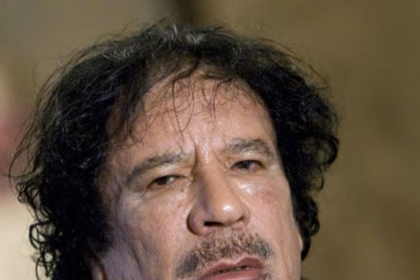
…Document reveals plan to reduce Africa’s dependence on Western currencies, particularly the U.S. dollar and the International Monetary Fund pressure
* U.S. and British intelligence (MI6) launched over 110 Tomahawk cruise missiles at Libyan air defense systems and military units
* NATO-led coalition launched a military campaign that significantly weakened Gaddafi’s military capabilities, enabling rebel forces to capture Tripoli and eventually track him down in Sirte, where he was killed
*Plus, how the United States played a critical military and diplomatic role in the 2011 intervention that overthrew Gaddafi, ranging from initial missile strikes to supporting a broader NATO campaign
*BY LINDELL BLUMTON KELVIN/INTERNATIONAL SECURITY ANALYST, NAIJA STANDARD NEWSPAPER Inc USA Reporting LIVE from Washington DC
TO have desired an Independent Africa, an African Central Bank and a single, gold-backed currency (often called the Gold Dinar); a Unified African Passport to reduce reliance on Western currencies and the International Monetary Fund (IMF), America’s led Central Intelligence Agency (CIA), in close coordination with British intelligence (MI6) eclipsed the ambition of former Libya Leader, Colonel Muammar Gaddafi and extinguished ‘life’ of out him in the process in the guise of ‘Nuclear Weapon’ stockpile inspection found to never have existed in Tripoli’.
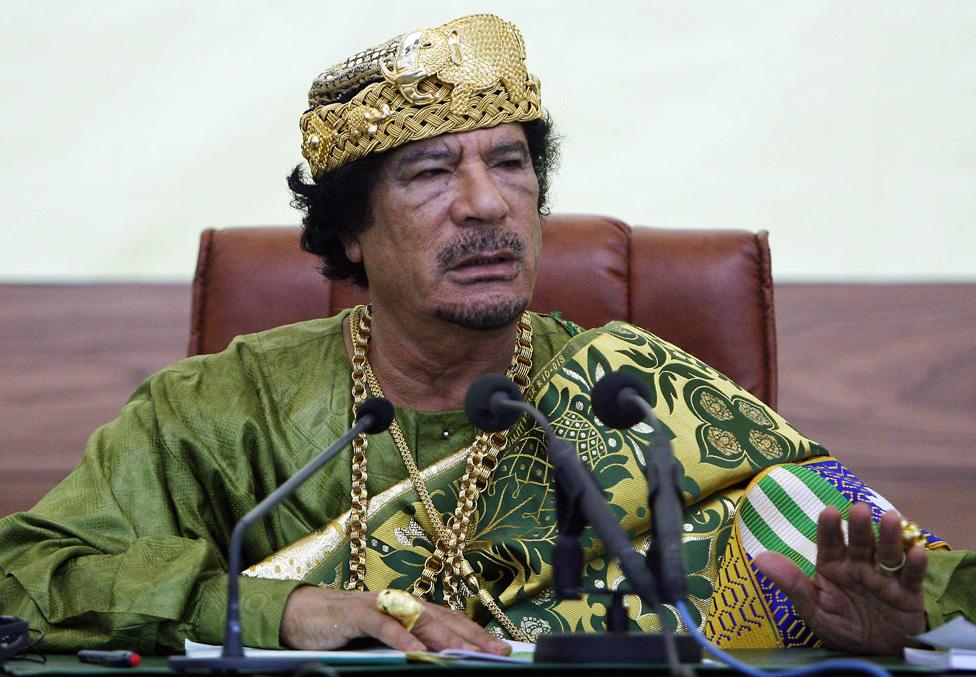
The United States played a critical military and diplomatic role in the 2011 intervention that overthrew Gaddafi, shifting from initial missile strikes to supporting a broader NATO campaign.
Gaddafi was a former leader of Libya who ruled from 1969 until his overthrow in 2011. Rather than the CIA “exposing” Gaddafi in a traditional sense, secret documents discovered in Tripoli after the 2011 fall of his regime exposed a hidden partnership between the CIA, British intelligence (MI6), and Gaddafi’s own spy agency.
The Shift: After opposing each other for decades, the CIA and Gaddafi’s regime began cooperating around 2003 and 2004. This happened after Libya agreed to give up its nuclear weapons start-on program and help the West fight terrorism.
The Evidence: Secret files found in the offices of Libyan spy chief Moussa Koussa showed that the CIA sent terrorism suspects to Libya at least eight times for interrogation.
Targeting Dissidents: The documents proved that Western agencies shared information with Gaddafi’s government to help track down and capture Libyan political dissidents, including rebel commander Abdel-Hakim Belhaj, who was rendered to Libya in 2004 and imprisoned.
The Fall of Tripoli: In August and September 2011, as rebel forces took over Tripoli, human rights organizations like Human Rights Watch and journalists walked into abandoned Libyan state security offices.
Discovery: They found thousands of paper files, faxes, and letters signed by Western intelligence officials.
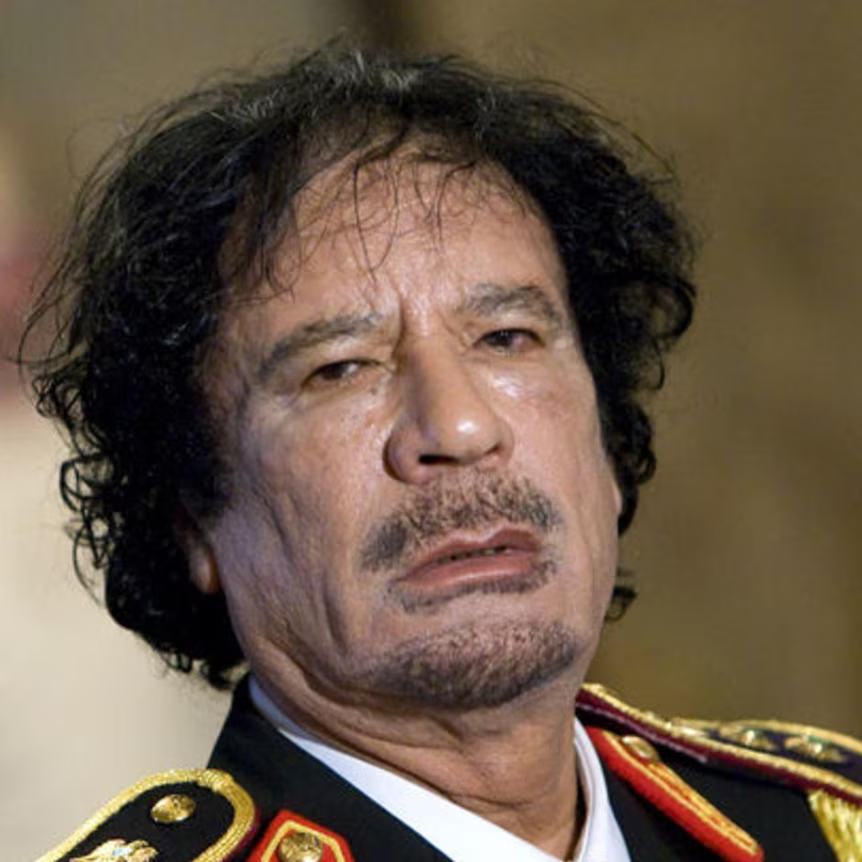
The Exposure: These files exposed the deep and controversial extent of intelligence-sharing, revealing that Western spy agencies worked closely with a dictator they had publicly condemned in secret.
For the records, Gaddafi heavily championed the concept of a single, unified United States of Africa during his time in power-serving notably as Chairperson of the African Union (AU) from 2009 to 2010.
His proposal includes: A single continental government and unified African military. A common African passport and free movement for citizens. The creation of independent financial institutions like an African Central Bank and a single, gold-backed currency (often called the Gold Dinar) to reduce reliance on Western currencies and the International Monetary Fund (IMF).
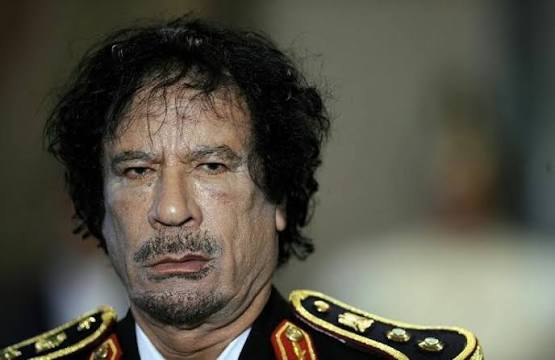
Why He Was Overthrown: As Gaddafi’s push for African financial and political autonomy made him a prominent figure in Pan-African history, his removal from power in 2011 was driven by a combination of domestic and international factors, including:
The Arab Spring and Civil War: In early 2011, widespread domestic protests erupted in Libya against Gaddafi’s 41-year authoritarian rule. The uprising quickly escalated into an armed civil war between state forces and the opposition National Transitional Council (NTC).
International Criminal Court (ICC) Warrants: Gaddafi was never arrested by an international tribunal prior to his downfall; instead, the ICC issued an arrest warrant for him in June 2011 for alleged crimes against humanity committed by his forces in cracking down on civilian uprisings.
NATO Military Intervention: Citing the need to protect civilians under UN Security Council resolutions, a NATO-led coalition launched a military campaign that significantly weakened Gaddafi’s military capabilities, enabling rebel forces to capture Tripoli and eventually track him down in Sirte, where he was killed in October 2011.
Gaddafi’s plans for a resource-independent Africa and a gold-backed currency posed a direct challenge to Western financial dominance and the U.S. dollar
Relations between the U.S. and Libya were hostile for decades. President Ronald Reagan labeled Gaddafi the “mad dog of the Middle East” after state-sponsored terrorist attacks. The U.S. bombed Libyan military targets in 1986. Libya was also linked to the 1988 bombing of Pan Am Flight 103 over Lockerbie, Scotland. Relations improved briefly in the 2000s after Gaddafi dismantled his nuclear weapons program.
Diplomatic Pressure: When anti-government protests erupted during the Arab Spring in February 2011, the U.S. condemned Gaddafi’s violent crackdown on civilians. President Barack Obama’s administration pushed for international sanctions and called for Gaddafi to step down.
Military Strikes (Operation Odyssey Dawn): On March 17, 2011, the UN Security Council passed Resolution 1973, authorizing a no-fly zone and measures to protect civilians. On March 19, the U.S. and the UK launched over 110 Tomahawk cruise missiles at Libyan air defense systems and military units.
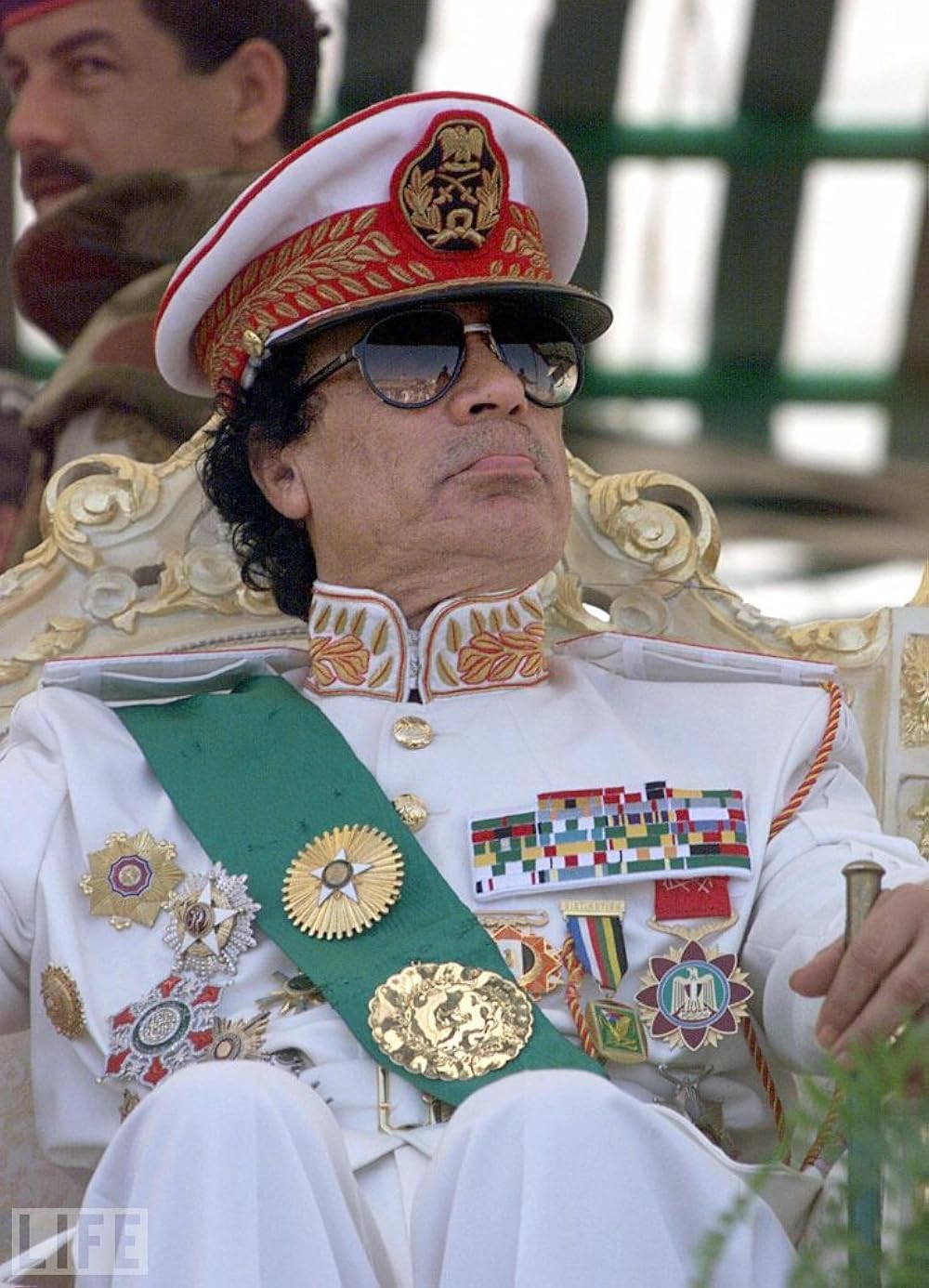
Transition to NATO: After initiating the initial aerial bombardment, the U.S. handed over command of the operation to NATO in late March 2011. However, the U.S. continued to provide vital intelligence, surveillance, refueling, and targeted drone or air support until Gaddafi was captured and killed in October 2011.
This were the national security classified information the United States government kept far away from millions of Africans.
As the saying goes: “Nothing is hidden under the sun”.
DONATE TO HELP BUILD A SPECIAL APPS FOR JOURNALISTS AGAINST LIVER ELEVATION & KIDNEY FAILURE:
CERTAINLY, Good journalism costs a lot of money. Without doubt, only good journalism can ensure the possibility of a good society, an accountable democracy, and a transparent government. We are ready to hold every corrupt government accountable to the citizens. To continually enjoy free access to the best investigative journalism in Nigeria, we are requesting of you to consider making a modest support to this noble endeavor.”
By contributing to NAIJA STANDARD NEWSPAPER, you are helping to sustain a journalism of relevance and ensuring it remains free and available to all without fear or favor.
Your donation is voluntary- please decide how much and how often you want to give.
FOR OFFLINE OR ANONYMOUS DONATION ON THIS PROJECT OR HELP COVER COST FOR SERIES OF UNDERCOVER REPORTING IN INVESTIGATIVE JOURNALISM, DO PAY DIRECTLY FROM ANYWHERE IN THE WORLD TO: UNITED STATES LEAD BANK, CHECKING ACCOUNT NUMBER: 213799651654 OR NIGERIA BANK NAME-MONIEPOINT *BANK ACCOUNT NUMBER: 7076577445
Feel free to send us an email: letters@nigeriastandardnewspaper.com or call us directly at +2347076577445 (Nigeria) or WhatsApp American Roaming Mobile Number: +16825834890 (Chat messages only available)
donation
