



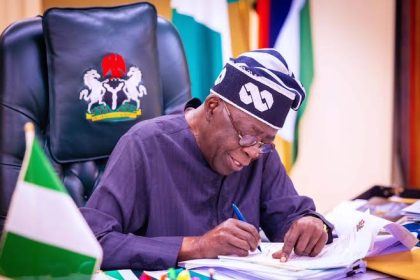
…63% of Nigerians (about 140 million people) still living below the poverty line
*“President Bola Tinubu’s Administration is owing IMF, World Bank a huge sum of money. Nigeria’s total public debt stood at ₦166.79 trillion ($120.93 billion) as of June 30, 2026, outside other trillions of external debts still outstanding by the end of this month of October”– Debt Management Office
*“The real question is not how much we borrow, but what we build, what value we create and what future we leave behind”–Presidency
*BY SHOLAPE OLU ADEBAYO/ARTS & CULTURE CORRESPONDENT/Houston, Texas, NAIJA STANDARD NEWSPAPER INC USA
Barely a few weeks into Nigeria’s 2027 Presidential Election on January 16, 2027, the nation’s president, a participant in the electioneering process under the All Progressives Congress, APC, Senator Bola Ahmed Tinubu has decided to look the other way, damn the consequences and compound more heaps of debts his almost four year government has already accumulated from the International Monetary Fund, IMF, and the World Bank which puts the generations of yet unborn Nigerian children into perpetual debts of repayment. President Tinubu has asked the National Assembly to approve a fresh external loan of $20.5 billion and €1.4 billion to finance critical development projects under the proposed 2026–2027 borrowing plan. Till now, 63% of Nigerian population (about 140 million people) still living below the poverty line. Without a doubt, Nigeria is now on sale.
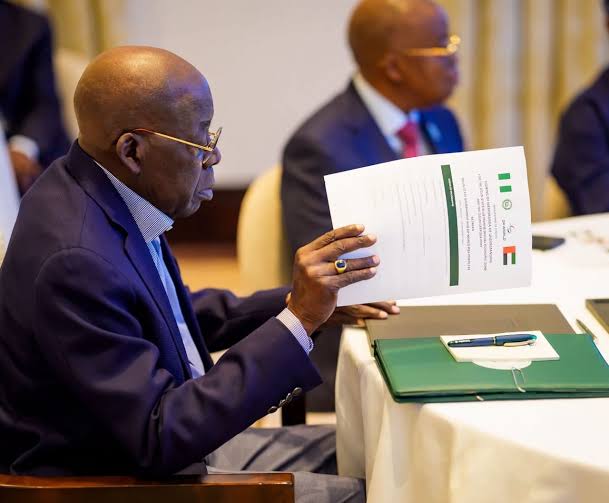
*PICTURE: NIGERIA PRESIDENT, BOLA AHMED TINUBU PREVIEWS LOAN PAPERWORK FINALLY SENT TO THE NATIONAL ASSEMBLY:
Sadly, the present administration entirely live on loans and borrowing from the World Bank and the IMF, global bodies discovered to have become ‘twin enemies of Nigeria’s progress’, since it gladdens them at any time to lure countries into debts, and hold overwhelming pressures around their heads, thereby placing unsolicited burden on Nigerians to continue to service their payments in hard earned United States dollars. And all the projects seem to be unverified, decoy to allegedly line the pockets of a few individuals and lavish same hugely into the 2027 elections.
Also, the President submitted a bill seeking to facilitate the transfer of convicted offenders between Nigeria and other countries.
The proposals were presented as the National Assembly resumed plenary on Tuesday.
Tinubu said the proposed external financing would help close infrastructure gaps and support economic development across key sectors, including power, transportation, agriculture, healthcare, education, water supply and security.
Senate President Godswill Akpabio announced the President’s requests during plenary.
According to the President, the projects were selected based on technical and economic assessments and are expected to create jobs, promote skills acquisition and entrepreneurship, reduce poverty and strengthen food security.
The projects are also expected to be implemented across the states and the Federal Capital Territory.
The borrowing request will undergo legislative scrutiny, with the Senate Committee on Local and Foreign Debts expected to review the proposal and report back within one week. The committee may also work with other relevant committees during the review.
Meanwhile, Tinubu has transmitted a 2026 amendment bill seeking changes to Nigeria’s legal framework for transferring convicted offenders.
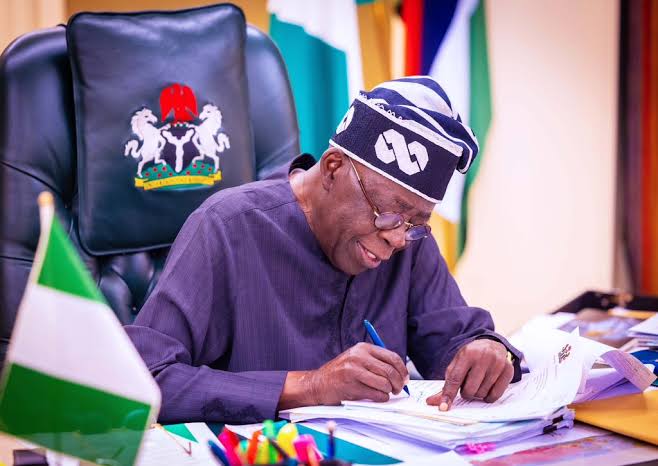
*PICTURE: NIGERIA PRESIDENT, BOLA AHMED TINUBU SIGNS LOAN PAPERWORK SENT TO THE NATIONAL ASSEMBLY:
The proposed legislation seeks to facilitate the implementation of prisoner-transfer agreements with countries outside the Commonwealth.
It would also empower the President to extend the law to countries with which Nigeria has concluded such agreements.
The bill has been referred to the Senate Committee on Rules and Business for further legislative action.
The National Assembly is expected to scrutinise both proposals, with attention on the terms of the proposed borrowing, the projects to be financed and the legal provisions governing international prisoner transfers.
All Tinubu’s Loans & Borrowing below:
*External Loans & Multilateral Approvals (May 2023 – May 2024):
June 2023: $750 million approved for the Power Sector Recovery Operation.
June 2023: $500 million approved for Women’s Empowerment (Nigeria for Women Project Scale-Up).
July 2023: $800 million approved for the National Social Safety Nets Program (Post-fuel subsidy palliative support).
September 2023: $700 million approved for Adolescent Girls Initiative for Learning and Empowerment (AGILE) / Education.
*Key Loans and Financing Secured / Requested (May 2024 – May 2025):
World Bank $2.25 Billion Loan: Approved in June 2024 to support macroeconomic stability and economic reforms.
World Bank $2.23 Billion / $2.35 Billion Package: Additional multi-sectoral World Bank project loans (targeting power, healthcare, agriculture, and education).
$6 Billion External Loan Plan: Approved by the National Assembly for budget implementation, infrastructure upgrades (including Lagos ports), and debt refinancing (featuring facilities from international and regional partners like First Abu Dhabi Bank and Citibank).
2025–2026 External Borrowing Plan ($21.5 Billion & Equivalents): Formally submitted to the National Assembly in May 2025, comprising roughly $21 billion alongside €2.19 billion, 15 billion Japanese Yen, and a €65 million grant to close fiscal gaps.
Total Public Debt: Nigeria’s total public debt climbed past ₦144 trillion ($94+ billion) by the end of December 2024, with the Tinubu administration accounting for a significant portion of new domestic and foreign debt additions driven by exchange rate depreciation and fresh credit lines.
Between May 29, 2025, and September 09, 2026, the incumbent government presented several major external and domestic borrowing requests to the National Assembly to finance budget deficits, offset pension obligations, and support large-scale infrastructure projects.
The primary loan packages approved or requested during this period include:
*The 2025–2026 External Borrowing Plan:
Initially requested in late May 2025 and formally approved by the National Assembly in July 2025, this package is the largest borrowing initiative of the period. It comprises:
$21.19 billion (or $21.5 billion in initial requests) in direct foreign loans, €4 billion and ¥15 billion from foreign sources; $65 million in grants.
$2 billion to be raised via foreign-currency-denominated instruments within the domestic debt market.
₦757 billion in local bonds to settle outstanding pension liabilities under the Contributory Pension Scheme.
*Note: An additional $347 million amendment to this plan was requested and approved in July 2025 specifically to provide extra funding for Phase 1 of the Lagos-Calabar Coastal Highway and the Nigeria Universal Communications Access Project (7,000 telecom towers).
*The March/April 2026 Infrastructure Loans:
In March and April 2026, the National Assembly approved a fresh $6 billion to $6.9 billion foreign loan facility.
$5 billion sourced from the First Abu Dhabi Bank and $1 billion from United Kingdom Export Finance.
This financing is targeted at supporting the revised 2026 budget (which expanded by ₦9 trillion) and rehabilitating decaying structures at the Tin Can Island and Lagos Port Complexes.
*Sokoto–Badagry Superhighway Loan (April 2026):
In late April 2026, the National Assembly approved a targeted $516.3 million loan request. These funds are allocated to finance Section 1 (Phases 1A and 1B) of the Sokoto–Badagry Superhighway project.
Nigeria’s Total Public Debt as of June 30, 2026:
Debt-to-GDP and Profile: These aggressive fiscal moves drove Nigeria’s total public debt past the ₦150 trillion threshold by mid-2026.
Debt Servicing Strain: The administration estimated that external debt servicing would climb significantly, with approximately $11.6 billion projected for debt service obligations in the 2026 fiscal cycle-consuming nearly half of expected federal revenues.
Administration Justification: President Tinubu heavily defended the borrowing streak, declaring that “borrowing is not leprosy” and maintaining that strategic debt is a necessary mechanism to pull the nation out of infrastructure deficits and drive long-term economic growth.
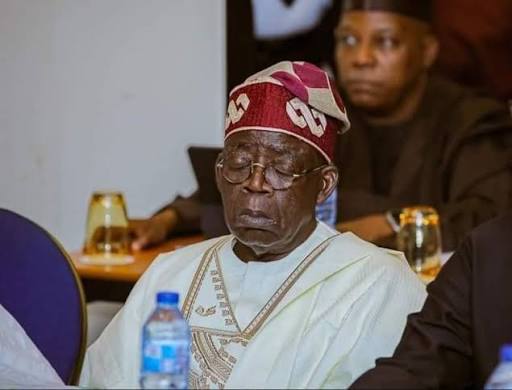
*PICTURE: NIGERIA PRESIDENT, BOLA AHMED TINUBU SLEEPS OFF, AWAITING LOAN PAPERWORK APPROVAL FROM THE NATIONAL ASSEMBLY:
Debt Management Office (DMO) verdict on Tinubu’s Presidency Loans & Borrowing:
The debt management office on President Tinubu loans since May 2023 to September 09, 2026, are stated below (unredacted):
Initial Debt Inherited (May 2023): Upon assuming office on May 29, 2023, President Bola Ahmed Tinubu’s administration inherited a total public debt of approximately ₦87.38 trillion (or around $113 billion in combined domestic and external debt) from the previous administration, which included the securitization of NGN 22.71 trillion in Central Bank of Nigeria “Ways and Means” advances.
Debt Growth (May 2023 – Mid/Late 2026): According to data released by the Debt Management Office (DMO) and economic reports, Nigeria’s total public debt has climbed substantially
Reached ₦159.28 trillion as of April 2026. Surged to a record ₦166.79 trillion by the end of June 2026, driven by continuous domestic and external borrowings, including World Bank facilities and newly approved legislative loan requests.
Debt Management Office reportedly said: “President Bola Tinubu’s Administration is owing IMF, World Bank a huge sum of money. Nigeria’s total public debt stood at ₦166.79 trillion ($120.93 billion) as of June 30, 2026, outside other trillions of external debts still outstanding by the end of this month of October”.
*Major Recent Borrowings & Requests (2025–2026):
March/April 2026: The National Assembly approved $6 billion in foreign loans ($5 billion from First Abu Dhabi Bank and $1 billion from UK Export Finance) targeting infrastructure projects like the Tin Can Island and Lagos Port complexes.
Mid-2026 Requests: President Tinubu submitted additional external/domestic borrowing proposals (including packages scaling up towards multi-billion dollar/naira tiers for the 2025–2026 borrowing and infrastructure plans), alongside ongoing World Bank negotiations for climate, social protection, and early childhood development loans ($500 million per tranche).
Debt Servicing Burden: The proposed 2026 Appropriation Bill earmarks ₦15.52 trillion (or roughly $11.6 billion) solely for debt servicing, which commands a massive portion (nearly 27% to nearly half) of the federal government’s projected annual revenue.
Administration’s Stance: President Tinubu has defended the borrowings as a necessary, standard economic tool for bridging critical infrastructure gaps and financing national development rather than a “stigma,” emphasizing disciplined utilization and reform efforts, while critics and private-sector groups (such as the Alliance for Economic Research and Ethics) express alarm over the rapid velocity of debt accumulation.
According to African customs and traditions, debts turn into slavery for an unborn child through a mechanism known as generational debt bondage or intergenerational pawnship, where a child’s future labor or freedom is legally or culturally pledged by their parents as collateral before birth.
Nigeria’s relationship with the International Monetary Fund (IMF) and the World Bank often feels like a “debt trap” because harsh economic conditions and heavy debt-servicing drain public resources away from local development.
*How the Debt Pressure Works from World Bank & IMF:
Foreign Currency Repayment: Loans must be repaid in hard currencies like U.S. dollars. When the naira devalues, the real cost of servicing the debt spikes dramatically.
*Re-borrowing and Accumulation: Even as Nigeria pays off specific old debts (such as clearing past IMF credits or making partial repayments), total obligations-particularly to the World Bank and other external creditors-have continued to swell into tens of billions of dollars (surpassing $45 billion in external obligations).
*Diverted Revenue: A massive portion of national revenue goes toward debt servicing rather than building schools, hospitals, power grids, or roads.
*Domestic Governance: Many economists also note that local corruption, wasteful government spending, and the failure to industrialize homegrown economic policies amplify the damage caused by foreign prescriptions.
These huge debts have awakened the regrettable narrative of slave trade in Nigeria which spanned both internal systems and the global Atlantic and trans-Saharan trades before being gradually suppressed and abolished by British colonial administration by the 1940s.
At this juncture, the population of Nigeria listed as 243,578,259 people, according to live estimates based on United Nations data have been pushed to the wall and had enough of mostly living from hands to mouth: where a parent cannot afford the school fees of the children, cannot pay medical fees of their sick kids, weep all through the night seeing their children go to bed hungry on empty stomach; farmers can’t bring their products from the farm to the market, children trek long distances to school based on the profligacy, desperate ambitions of public office holders to retain power at all costs, damning the consequences of its after-effect policies on the masses.
According to the latest data from the Debt Management Office (DMO), Nigeria’s total public debt stood at ₦166.79 trillion ($120.93 billion) as of June 30, 2026.
Tinubu’s Argument on subject matter:
Nigeria President defends self, argues: “The real question is not how much we borrow, but what we build, what value we create and what future we leave behind.”
President Tinubu has robustly responded to criticism, especially from opposition leaders, over new loans the country has accessed from international institutions and banks.
In an essay titled “From reforms to delivery: Our infrastructure investment and growth strategy,” to be published on Nigerian news platforms, President Tinubu wrote: “The real question is not how much we borrow, but what we build, what value we create and what future we leave behind.”
President Tinubu identified the Lagos-Calabar Coastal Highway, Sokoto-Badagry Superhighway, Trans-Sahara Superhighway, electricity grid upgrades and the modernisation of key commercial ports in Lagos as major projects expected to strengthen Nigeria’s productive capacity.
In a statement authored and signed by Bayo Onanuga, Special Adviser to the President (Information and Strategy) on October 29, 2026, on behalf of Aso Rock, the presidency said the projects, alongside investments in healthcare, education and vocational training, would connect economic regions, reduce logistics costs, unlock agricultural and industrial potential and attract private investment.
The Lagos-Calabar Coastal Highway is expected to cut logistics costs along its corridor by 15 to 20 per cent. It could add up to two per cent to Nigeria’s GDP through expanded trade, tourism, and industrial activity.
According to Tinubu, the project is also projected to generate about 100,000 direct jobs in construction and engineering, alongside more than 150,000 indirect jobs in logistics, materials and related services.
“We are not simply building highways. We are opening economic corridors, connecting markets, unlocking industries and reshaping Nigeria’s economic geography,” the President said.
He said the administration’s ambition to build a $1 trillion economy by 2030 would require sustained infrastructure investment to support higher productivity, industrialisation and trade.
“We cannot build a USD 1 trillion economy with infrastructure designed for an economy a fraction of that size,” Tinubu said.
He wrote that improving economic indicators and growing international investor confidence are creating opportunities for Nigeria to attract long-term investment and expand critical infrastructure.
The President said the economic reforms his administration introduced in May 2023 helped restore macroeconomic stability, strengthen public finances, and improve the country’s standing in international financial markets.
He said a $1 trillion economy would not emerge by declaration alone but must be built through sustained investment, higher productivity, industrialisation, and trade, stressing that infrastructure development would be critical to achieving the target by 2030.
In an article titled “From reforms to delivery: Our infrastructure investment and growth strategy,” Tinubu said real Gross Domestic Product growth reached 4.43 per cent in the second quarter of 2026, while headline inflation fell to 14.63 per cent in September from 20.98 per cent a year earlier.
He also said gross external reserves rose to $55.1 billion as of October 9, 2026, including about $46 billion in net reserves, while the tax-to-GDP ratio increased to 12.5 per cent from seven per cent.
Tinubu said real Gross Domestic Product growth reached 4.43 per cent in the second quarter of 2026, while headline inflation fell to 14.63 per cent in September from 20.98 per cent a year earlier.
The President attributed the improvements to measures including petrol subsidy removal, exchange rate unification, tax reforms and coordinated efforts to tackle inflation.
“The decisions taken since 2023 were difficult but necessary,” he said, referring to the reforms.
Tinubu said the gains have strengthened Nigeria’s ability to attract investment and finance projects that support long-term economic growth.
“Confidence has a price; our cost of borrowing is going down, and the country risk premium has drastically decreased,” he said.
The President cited positive assessments by international credit rating agencies as evidence of improved confidence in the economy.
“These are not political endorsements; they are independent assessments by global rating agencies, index providers, regulators and investors, recognising stronger external reserves, improved macroeconomic management and greater financial credibility,” Tinubu said.
According to the President, the improved standing could help Nigeria attract more institutional investors, secure longer-term financing and reduce borrowing costs.
He said the administration was shifting public borrowing away from financing short-term fiscal pressures towards investments that would generate economic returns, create jobs and expand opportunities for future generations.
The President said the government was also pursuing longer-term financing arrangements to match the lifespan of infrastructure assets, reduce refinancing pressures and secure more competitive funding for productive investments.
President Tinubu said Nigeria must convert renewed international confidence into capital expenditure, completed infrastructure and lasting economic benefits for citizens.
He identified five priorities for the next phase of the Federal Executive Council’s economic strategy: food affordability and energy price stability; budget harmonisation and fiscal discipline; completion of high-impact projects and investment in critical infrastructure; an improved economic policy framework and regulatory efficiency; and targeted household support alongside investment in human development.
The President stressed that the success of the current administration’s economic schemes would be measured by completed projects, increased investment, employment generation and improved living standards.
“Securing financing is not the achievement. Completing the project, delivering value and improving the lives of Nigerians is the achievement,” he said.
He added that the nation’s economic ambition must be supported by responsible borrowing and investments that create lasting opportunities for future generations.
DONATE TO HELP BUILD A SPECIAL APPS FOR JOURNALISTS AGAINST LIVER ELEVATION & KIDNEY FAILURE:
CERTAINLY, Good journalism costs a lot of money. Without doubt, only good journalism can ensure the possibility of a good society, an accountable democracy, and a transparent government. We are ready to hold every corrupt government accountable to the citizens. To continually enjoy free access to the best investigative journalism in Nigeria, we are requesting of you to consider making a modest support to this noble endeavor.”
By contributing to NAIJA STANDARD NEWSPAPER, you are helping to sustain a journalism of relevance and ensuring it remains free and available to all without fear or favor.
Your donation is voluntary- please decide how much and how often you want to give.
FOR OFFLINE OR ANONYMOUS DONATION ON THIS PROJECT OR HELP COVER COST FOR SERIES OF UNDERCOVER REPORTING IN INVESTIGATIVE JOURNALISM, DO PAY DIRECTLY FROM ANYWHERE IN THE WORLD TO: UNITED STATES LEAD BANK, CHECKING ACCOUNT NUMBER: 213799651654 OR NIGERIA BANK NAME-MONIEPOINT *BANK ACCOUNT NUMBER: 7076577445
Feel free to send us an email: letters@nigeriastandardnewspaper.com or call us directly at +2347076577445 (Nigeria) or WhatsApp American Roaming Mobile Number: +16825834890 (Chat messages only available)
donation
